
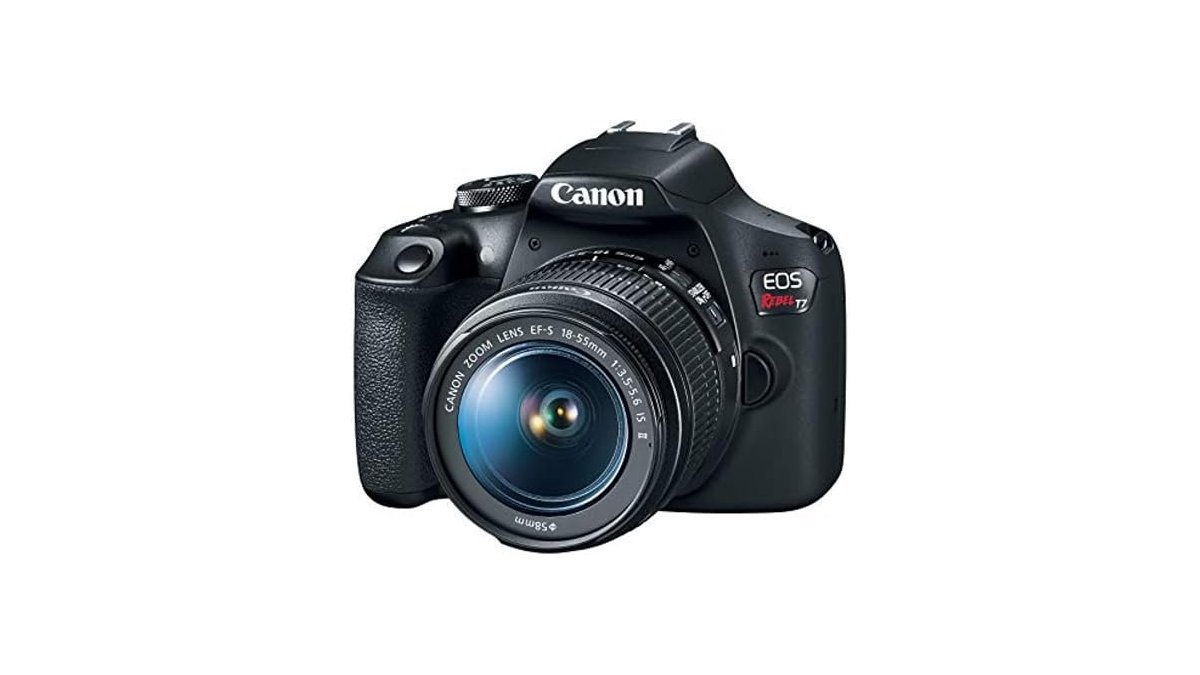
The best video camera for beginners depends on whether you prefer a traditional DSLR for manual control, like the Canon EOS Rebel T7, or a simple, all-in-one camcorder bundle, such as the 4K Vlogging Camcorder. Key considerations include your need for interchangeable lenses, audio recording capabilities, and whether you require additional gear like tripods or microphones.
1. Canon EOS Rebel T7 DSLR Camera EF-S 18-55mm f/3.5-5.6 is

Best for: Someone who wants to learn the fundamentals of manual photography.
This camera is for the student who wants to learn how light and sensors work together. Unlike fixed-lens camcorders, this DSLR allows you to change your lens based on the shot, providing a 24.1 Megapixel sensor for high-quality images. It includes a 9-Point AF system to help track subjects, and you can use the EOS Utility Webcam Beta Software to connect it to your computer.
Because this is a DSLR, it requires you to learn about exposure, focus, and lens selection. It isn’t for the user who wants a simple “point-and-shoot” experience, as the menu system is more complex than a standard camcorder. It’s a tool for growth rather than an immediate fix for quick social media clips.
Good if:
- You want to learn manual camera settings.
- You need a camera that supports interchangeable lenses.
- You plan to use it for high-quality stationary webcam work.
Skip it if:
- You want a simple device that works without learning settings.
- You need a built-in, all-in-one vlogging kit.
2. 4K Video Camera Camcorder 96MP Vlogging Camera

Best for: Someone who wants a complete kit for daily video recording.
This camcorder is designed for simplicity. It records in 4K and includes a 3.0-inch touchscreen that rotates 270 degrees, which is essential for checking your framing during vlogs. It also features IR night vision, allowing you to record in low-light conditions by switching to a high-contrast mode.
The device comes with two batteries and a 32GB memory card, so you don’t need to buy extra accessories to get started. If you plan to record long sessions, use the recording while charging feature to avoid battery swaps.
It isn’t for the professional filmmaker who needs advanced color grading or manual audio monitoring. If you need to stream, connect the camera via USB to use it as a webcam without installing drivers.
Good if:
- You want a camera that includes a memory card.
- You need a screen that flips for selfies.
- You record in dark environments often.
Skip it if:
- You’re looking for professional-grade audio inputs.
- You want to change lenses for different visual styles.
- You require optical zoom, as this uses 18X digital zoom for distant subjects.
3. 5K UHD Vlogging Camera

Best for: Content creators who need a versatile, all-in-one podcasting setup.
This camera offers 5K video resolution at 20fps or 4K at 60fps, which is high for this category. It includes a bundle with a tripod, external noise-reduction microphone, and lens hood. This microphone is a significant addition for those recording interviews or podcasts where audio clarity is paramount. It features a durable metal hinge on the 3.0-inch IPS touch screen, making it a reliable option for frequent use, low-angle shots, or selfies.
This bundle is meant for beginners who don’t want to research and buy separate audio or stabilizing gear. If you’re a student or senior, the interface is designed for instant mastery. However, it isn’t for the person who wants the smallest possible device. The extra accessories, including two 1800mAh batteries and a 32GB card, require more storage capacity in a bag than a standalone camera.
Good if:
- You need a microphone and tripod included.
- You want high-resolution 5K video files.
- You’re a beginner starting a YouTube channel.
Skip it if:
- You need a tiny camera for pocket carry.
- You’re already happy with your existing audio gear.
- You prioritize extreme portability over a complete, multi-accessory kit.
4. ORDRO Z36 Video Camera Camcorder 4K

Best for: Users who prioritize shooting in low-light or night settings.
The ORDRO Z36 stands out because it features built-in LED fill lights and two infrared lamps. These tools are designed to help you capture footage in dim rooms or late at night. It records in 4K at 30fps and uses a 1/2.4 CMOS sensor, which is a standard size for this type of camcorder.
While the night vision is a strong feature, this camera isn’t for those who prioritize daytime cinematic depth of field. Because the lens is fixed, you won’t get the same background blur that a DSLR with a large aperture lens provides. If you need to capture distant subjects, use the 18X digital zoom.
Good if:
- You frequently record evening events.
- You want a camera with built-in fill lights.
- You need a remote control for solo shooting.
Skip it if:
- You only record during bright daylight.
- You want manual lens controls.
- You require high-end optical zoom.
If you’re a vlogger, use the 270° rotatable IPS screen to frame yourself. If you’re shooting long sessions, swap between the two included batteries to keep recording.
5. 4K 48MP Video Camera

Best for: Someone who needs a portable camera for travel vlogging.
This model is built to be lightweight and easy to carry. It includes an external microphone to help reduce ambient noise, which is a common problem for small cameras. The anti-shake feature is useful for walking shots, and the dual-battery supply ensures you can keep recording throughout a day of travel.
If you’re shooting in dim light, engage the night vision mode to maintain vivid image quality. When framing creative angles, use the 3.0-inch rotating flip screen to monitor your shot in real time. For distant subjects, the 18X digital zoom allows you to pull in details that would otherwise be lost.
Note that this camera doesn’t include an SD card in the package, so you must buy one separately. It isn’t for the user who wants to avoid extra setup steps, as you’ll need to purchase and install your own storage before the camera will function. Ensure you select a high-speed SD card, as the device supports a maximum capacity of 512GB.
Good if:
- You prioritize a lightweight design.
- You need a dedicated microphone for better audio.
- You travel often and need long battery life.
Skip it if:
- You want a camera that includes all accessories in the box.
- You have never used an SD card before.
6. 6K WiFi Flip Screen Digital Camera

Best for: Creators who want both macro and wide-angle shooting options.
This camera is unique because it includes two lenses: a wide-angle lens for landscapes and a macro lens for close-ups. It supports 6K video and includes a bi-color fill light, which allows you to adjust the warmth or coolness of your lighting. This is a very flexible choice for someone who wants to experiment with different types of photography.
While the lens options are useful, they aren’t interchangeable in the same way as a DSLR. It isn’t for the user who wants to invest in a long-term professional lens collection, as these are fixed add-ons designed specifically for this camera body. If you’re looking for a professional-grade sensor or a modular system to grow with over years, look elsewhere. This kit is built for immediate, portable use.
Use the wide-angle lens for expansive vistas and the macro attachment for fine detail work. If your subject is small, like a flower or a product detail, reach for the macro lens first. If you’re capturing a room or a horizon, swap to the wide-angle.
Good if:
- You want to shoot both landscapes and close-ups.
- You want to adjust the color of your lighting.
- You need easy WiFi sharing for social media.
Skip it if:
- You want a true interchangeable lens system.
- You find multiple lenses too complicated to manage.
7. Camcorder Video Camera 2.7K 48MP

Best for: Someone who wants the simplest possible interface.
This camcorder is designed for students and teens who might feel intimidated by complex menus. It uses a fixed-focus lens, meaning you don’t have to worry about focusing. Everything from 0.6 meters to infinity stays sharp. It also includes a pause function, which helps you combine multiple clips into one file without needing to edit on a computer.
Because the lens is fixed-focus, it isn’t for those who want to create professional-looking portraits where the background is blurred. If you move closer than 0.6 meters, the camera cannot maintain focus on your subject. Always check your distance before recording, as the fixed-focus design can’t adjust for macro photography.
Good if:
- You want a simple point-and-shoot experience.
- You want to avoid manual focusing.
- You need to pause and resume recording in one file.
- You need a device that functions as a plug-and-play webcam.
Skip it if:
- You want to create professional blurred backgrounds.
- You need to record very close-up detail.
- You require an HDMI output port for external monitors.
- You need manual focus control for creative shots.
Where These Overlap
Most of these devices, such as the 4K Vlogging Camcorder, the 5K UHD Vlogging Camera, and the ORDRO Z36, share a core design: a spacious rotating touchscreen, 4K or higher resolution, and a bundle of accessories. They solve the “what else do I need to buy” problem for beginners by including essentials like extra batteries or memory cards. If you choose between these, the decision should come down to the specific extras. Look for external microphones if audio quality is your priority, or infrared night vision if you film in low light.
The Canon EOS Rebel T7 stands apart as a traditional DSLR. It uses an optical viewfinder and an interchangeable lens system, which requires more technical knowledge than the point-and-shoot camcorders. If you want a camera that grows with you as your skills develop, choose the Canon. If you prioritize a “turn it on and go” experience with built-in features like face detection and simple USB-webcam connectivity, the camcorders are the better fit. Remember that some camcorders, like the ISHARE 4K, exclude the SD card from the box, while others provide a 32GB or 64GB card; check the package contents to avoid an unexpected trip to the store.
Still Not Sure?
How often will I really use it?
If you plan to record every single day, you’ll want a camera with a robust battery system and a comfortable, ergonomic grip. The 5K UHD Vlogging Camera comes with two batteries and a dedicated microphone, which helps if you’re filming long sessions. If you only plan to record occasionally, the 2.7K Beginner Camcorder is a simpler, less demanding choice.
What do I already own that this has to work with?
If you already have a computer you use for editing, check if your camera supports webcam mode via USB, which most of these do. If you have a specific tripod you want to use, ensure the camera has a standard 1/4-inch thread. The 2.7K Beginner Camcorder lists this compatibility, making it easy to integrate into a home studio setup.
What am I most likely to regret choosing?
If you choose the Canon EOS Rebel T7, you may regret the learning curve if you just wanted quick videos. If you choose a fixed-lens camcorder, you may eventually regret not having the ability to swap lenses for different creative looks.
Related guides
Frequently Asked Questions
Do I need to buy a memory card separately?
It depends on the model you pick. Many bundles, such as the 5K UHD Vlogging Camera, include a 32GB card in the box. However, others like the 4K Compact Camcorder don’t include one. Always check the “what you get” section of the listing, as using high-speed storage is important for stable video recording.
Can I use these cameras for live streaming?
Most of the camcorders listed, including the 4K Vlogging Camcorder and the ORDRO Z36, support webcam mode via USB without needing extra drivers. The Canon EOS Rebel T7 also supports this through specific software. If live streaming is your main goal, look for a model that explicitly mentions “webcam” or “plug and play” support to avoid complicated setup issues.
What does “fixed-focus” mean for my videos?
A fixed-focus lens, like the one on the 2.7K Beginner Camcorder, doesn’t have an autofocus motor. It keeps everything sharp within a set range, usually from 0.6 meters to infinity. This is great for beginners because you never have to worry about your camera focusing on the wrong object, but it does mean you can’t achieve shallow depth-of-field effects where the background is blurred.
How do the batteries work for all-day shooting?
Most of these camcorders come with a backup power supply to keep you shooting longer. For example, the 4K Compact Camcorder provides a dual-battery supply to ensure you have power for longer sessions. Some models also support “recording while charging,” which lets you plug the camera into a wall outlet or power bank to record indefinitely, provided you have enough storage space on your memory card.


