
Choosing the right tires for your 5th wheel trailer comes down to matching the load capacity and construction to your specific towing habits. While many tires share a similar size, differences in ply ratings, steel belt construction, and sidewall protection define how well they handle heavy loads and road hazards.
Best overall: Free Country Premium Trailer, which features a full nylon cap ply across the tread for added safety and a dedicated scuff guard for sidewall protection. Highest load capacity: Transeagle ST Radial H, an all-steel radial tire with a 16-ply rating designed to support higher weight limits for demanding, heavy-duty hauling needs. Best warranty coverage: Americus Capability STR, which provides a 36-month warranty, ensuring long-term confidence in the durability of your trailer tire investment.
This guide is for 5th wheel owners looking to understand the technical differences between these common tire options.
How We Picked
We compared 16 different tire listings to identify options that provide clear, reliable specifications for 5th wheel trailers. To earn a place in this guide, a tire had to list essential data like ply rating, load index, and speed certification. We focused on the manufacturer’s stated construction methods, such as steel-belted designs and sidewall reinforcements, to help you understand how each tire handles the road.
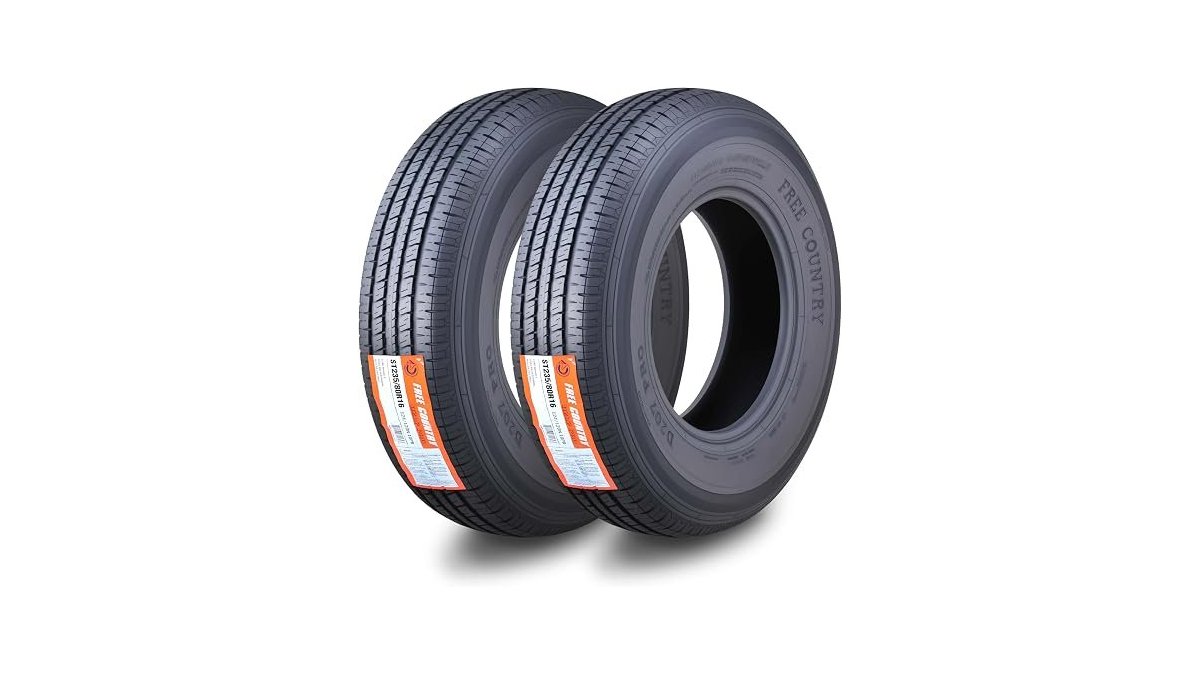
1. Free Country Premium Trailer Tire ST235/80R16 10PR E 124N w/Scuff

Best for: Owners needing extra sidewall and tread protection.
The Free Country Premium Trailer stands out because it uses a nylon cap ply that spans the entire tread area. Many other tires only use nylon strips on the shoulders, so this design offers a significant upgrade in construction. It’s rated for 10-ply strength and includes a scuff guard ring on the sidewall to help defend against minor impacts.
This tire handles 3,520 lbs at 80 psi. If your trailer requires a load range higher than E, this model won’t suffice. Don’t exceed these pressure or weight limits, as doing so compromises the structural integrity of the tire.
This tire is built for those who prioritize extra reinforcement in their trailer tires. Because it has a speed rating of 88 mph, it handles highway speeds well, though you should always stay within your trailer’s recommended limits. It isn’t intended for drivers who need the extreme load capacity of a 16-ply tire.
Pros
- Nylon cap ply across entire tread.
- Scuff guard ring for sidewall protection.
- Higher speed rating for highway use.
Cons
- Not designed for ultra-heavy commercial loads.
2. Transeagle ST Radial ST235/80R16 All Season H (16 Ply) All

The Transeagle ST Radial H is built for those who require serious weight support. With a 16-ply rating and all-steel construction, this tire is designed specifically for heavy-duty trailer applications. It supports up to 4,189 lbs per tire when used in a single configuration, or 3,748 lbs in a dual setup.
This is a specialized tire for heavy haulers, not for light utility use. If you’re hauling standard loads, this heavy-duty construction may feel unnecessarily stiff, leading to a harsher ride. You must ensure your rims are rated for the higher pressures required by this reinforced tire. Using standard wheels can lead to rim failure under the stress of these loads.
Since it’s an all-season tire, it offers consistent performance throughout the year on highway surfaces. It’s speed-rated L, meaning you must keep your travel at or below 75 mph. Exceeding this speed compromises the structural integrity of the steel casing. Remember that this purchase is for the tire only; you must source your own rims separately.
Pros
- Robust 16-ply all-steel construction.
- High load index for heavy trailers.
- Designed for all-season highway use.
Cons
- Requires compatible heavy-duty wheel hardware.
3. AMERICUS Capability STR ST235/80R16-12PLY Load Range F 126/122N Trailer Tire

Best for: Buyers who want a long-term warranty.
The Americus Capability STR is purpose-built for trailers, with a focus on stable tracking and consistent performance. Its reinforced sidewalls provide the necessary support for heavy cargo, while the tread pattern is optimized to encourage even wear over time. The 36-month warranty is a key feature that highlights the manufacturer’s confidence in the product’s longevity.
This tire is strictly for trailer use and shouldn’t be used on passenger vehicles. If you’re towing utility, RV, boat, or cargo trailers, this tire provides the structural integrity needed for highway speeds. However, check your current load requirements before purchasing. If your trailer demands maximum structural integrity or exceeds the specific load ratings of this 12-ply model, this tire won’t provide the safety margins you require.
Choosing the wrong load range often leads to premature sidewall failure or heat buildup during long hauls. Match your trailer’s gross weight to the 126/122N rating to ensure you remain within safe operational limits.
Pros
- Three-year warranty coverage included.
- Optimized tread for even wear.
- Stable tracking for highway speeds.
Cons
- Not suitable for high-load heavy-duty demands.
- Restricted to trailer-only applications.
4. Ironman STR ST235/80R16 F/12PLY

Best for: A smoother ride during long trips.
The Ironman STR uses radial plies to help dissipate heat more effectively than older bias-ply designs. This construction choice generally leads to a smoother towing experience and improved fuel economy. It’s a straightforward, purpose-built radial tire for those who want to upgrade from traditional tire types.
If you’re currently running bias-ply tires, the switch to radial construction will immediately reduce the vibration felt in your tow vehicle. This is especially noticeable on long hauls where heat buildup typically compromises tire integrity.
This tire is a solid choice for owners who value ride comfort on long hauls. Because it’s an F-rated 12-ply tire, it provides a middle ground for load capacity. If your trailer requires a higher ply count for heavy-duty hauling, this tire won’t meet your safety requirements. It isn’t for owners who need the maximum possible ply count or specialized all-terrain tread patterns.
Pros
- Radial plies improve heat dissipation.
- Smoother ride than bias-ply tires.
- Designed for better fuel efficiency.
Cons
- Lacks the highest ply rating available.
5. Roundrule ST Hikee ST235/80R16 All Season E (10 Ply) Semi-Steel

Best for: Standard highway trailer use.
The Roundrule ST Hikee is a semi-steel radial tire designed for all-season traction. It features a 10-ply rating, making it a reliable choice for standard 5th wheel setups. Its radial construction provides stable highway performance at speeds up to 75 mph.
This tire is a functional option for everyday towing where extreme load capacity isn’t required. You should choose this model if your trailer requires a load index of 123/119, which supports up to 3417 lbs in a single configuration or 2998 lbs in a dual setup.
Many buyers mistake this for a commercial-grade tire. If you haul loads exceeding these specific weight limits, this tire will fail prematurely. Always check your trailer’s gross vehicle weight rating against these numbers before installation. If your total weight is lower, this tire offers a simple, effective solution. Note that this purchase includes the tire only; the rim and wheel aren’t included.
Pros
- Reliable 10-ply semi-steel radial construction.
- Good for all-season highway traction.
- Simple, effective design for trailers.
Cons
- Limited to standard trailer load ranges.
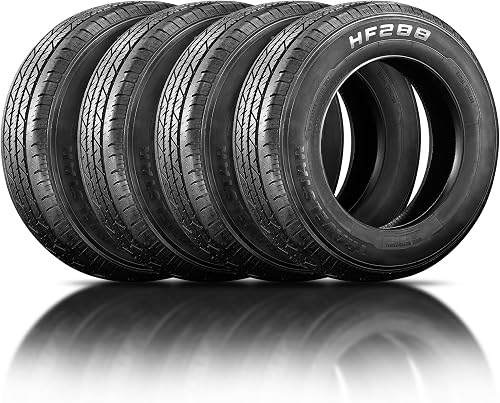
6. Set of 4 Travelstar HF288 ST235/80R16 127N 12 Ply Special
Best for: Frequent towers needing shock absorption.
The Travelstar HF288 uses a double steel belt construction to manage shock absorption and improve towing stability. It’s an F-rated, 12-ply tire that includes a 3-year road hazard warranty. The solid shoulder ribs are designed to keep constant contact with the road, which helps distribute pressure evenly across the tread.
If you’re hauling a 5th wheel, ensure your setup accounts for the 3,860-pound single tire load capacity. While the tire is rated for 87 mph, always verify your trailer’s specific weight requirements against the 100 psi maximum pressure limit.
Many buyers mistake this for a light truck tire, but it’s strictly for trailers. Using these on a passenger car or SUV will lead to premature failure and safety risks.
This tire is built for those who want a combination of durability and a robust warranty program. It’s a premium-quality option that fits a wide range of trailers, from small utility units to larger 5th wheels.
Pros
- Double steel belt for shock absorption.
- Includes 3-year road hazard warranty.
- Solid shoulder ribs for even wear.
Cons
- Must be used only on trailers.
7. MaxForce ST01 ST235/80R16 All Season E (10 Ply) Semi-Steel Tire

Best for: Year-round weather versatility.
The Tourador MaxForce ST01 is designed to handle various driving conditions with its all-season traction rating. It’s a 10-ply semi-steel radial tire that balances load support with a speed rating of 87 mph. This makes it a versatile pick for towers who encounter different road conditions throughout their travels.
This tire is a dependable choice for those who want a balance of speed and load capacity. Because the load index of 124/120 supports up to 3527/3086 pounds per tire, it’s best suited for standard 5th wheel trailers. Avoid using this model on heavy-duty haulers that exceed these weight thresholds, as doing so risks premature sidewall failure.
If your trailer requires a 16-inch tire for highway use, this radial construction provides the necessary stability. Remember that this purchase includes the tire only; you must source your own rims or wheels separately. It doesn’t have the highest ply count in the group, so verify your trailer’s specific weight requirements before installation.
Pros
- Versatile all-season traction design.
- Respectable speed rating for highway use.
- Reliable 10-ply semi-steel construction.
Cons
- Not for the heaviest load requirements.
- Rim and wheel excluded.
How to Choose 235 80r16 5th Wheel Tires in Sixty Seconds
Which ply rating do I actually need?
The ply rating reflects the tire’s strength and its ability to carry weight. Standard tires are sufficient for most 5th wheels, but if you carry heavy cargo or have a large trailer, look for options with higher load ranges. Always check your trailer’s gross vehicle weight rating (GVWR) before choosing. A higher ply rating adds durability but requires you to ensure your rims can handle the pressure. Never exceed the tire’s weight limit, as overloading can lead to premature failure.
Does “all-steel” matter for my trailer?
All-steel construction adds significant stiffness and durability to the tire. This helps with stability and heat dissipation on long highway stretches, which is vital for heavy 5th wheels. If you tow long distances or through hot climates, Federal Motor Carrier Safety Administration guidelines emphasize the importance of maintaining proper inflation and monitoring tire condition. Steel-belted tires are generally more resistant to punctures than standard radial tires, making them a wise upgrade for frequent travelers.
What should I check before buying?
Always confirm the speed rating and the physical dimensions of your current tires. Even if two tires have the same “235/80R16” size, they may have different load indexes or pressure requirements. Check if your current rims are rated for the PSI needed by the new tires. If you’re switching from a standard load range to a heavy-duty one, you must verify your wheels can handle the increased load. Finally, confirm if the tire includes a road hazard warranty, as this provides extra protection.
Nebula Grand Trailer-N’ 007 is another heavy-duty option with an H-speed rating and 16-ply construction for those needing maximum support. HORSESHOE ST235/80R16 tires offer a 10-ply build with a rim-guard feature, similar to the Free Country Premium Trailer. Set ST235/80R16 Duty Trailer Tires provide a heavy-duty alternative if you’re looking for a set of four with proven durability specs.
Frequently Asked Questions
Is a 10-ply tire enough for my 5th wheel?
A standard load range tire is sufficient for most 5th wheel trailers, provided your total trailer weight stays within the tire’s load index. If you frequently load your trailer to its maximum capacity, consider a higher load range for extra safety. Always consult your trailer manufacturer’s manual for the minimum required load range.
How often should I check my trailer tire pressure?
Check your trailer tire pressure before every trip and periodically during long journeys. Proper inflation is the most important factor in preventing heat buildup and tread separation. Use an accurate gauge to verify the pressure against the cold inflation PSI specified on the tire’s sidewall.
What usually causes a trailer tire to fail first?
The most common cause of trailer tire failure is under-inflation, which creates excessive heat inside the tire structure. Overloading your trailer beyond the tire’s capacity is the second most frequent cause. Even if a tire looks fine on the outside, internal damage from heat or overloading can lead to a blowout.
Can I mix different brands of tires on my trailer?
Use the same brand, model, and ply rating for all tires on your trailer to ensure balanced handling and even wear. Mixing different types of tires can lead to unpredictable handling during emergency maneuvers. If you must replace one tire, match it with the exact model and load range of the others.
Conclusion
Investing in high-quality rubber is the best way to ensure your peace of mind on every long trip. Once you’ve picked the right set for your rig, don’t forget to check your air pressure before you head out. You’ll be glad you did when you’re cruising smoothly down the open road.


