
Selecting a trail camera with night vision depends on whether you need real-time alerts or a simple device that stores images on a card. The main difference lies in how they connect: cellular models use mobile networks, while non-cellular versions prioritize battery efficiency and ease of use.
Best overall: Tactacam Reveal X 3.0 offers a reliable multi-carrier cellular setup that automatically connects to the strongest available signal for consistent, real-time property monitoring. Best for first-time users: WOSPORTS Trail Camera provides an intuitive menu and a built-in screen, making it easy to check your photos without needing any complex software. Best for high-activity areas: GardePro E5S features a 0.1-second trigger speed and three sensors, ensuring you capture fast-moving wildlife before they exit the frame.
This guide is for hunters, property owners, and wildlife enthusiasts looking for dependable monitoring tools.
How We Picked
We compared 48 different trail camera listings to find the most capable options for various needs. To earn a spot, a product had to clearly state its trigger speed, power options, and image resolution. We excluded models that lacked clear specifications regarding their field of view or night vision capabilities. Our focus remained on verifiable features like connectivity types, waterproofing ratings, and storage methods to ensure the information provided matches what the manufacturer guarantees.
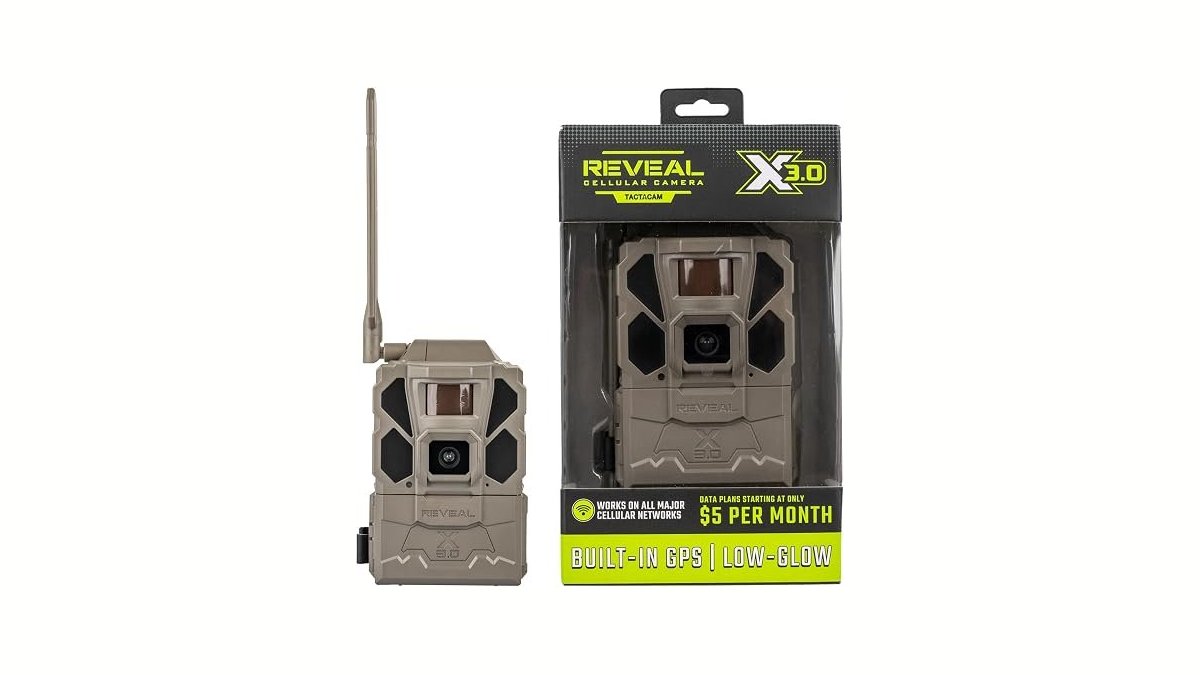
1. Tactacam REVEAL X 3.0 Cellular Trail Camera

Best for: Property owners needing real-time remote alerts.
This camera simplifies connectivity by using dual-carrier technology to lock onto whichever signal is strongest at your location. You don’t need to swap SIM cards or worry about carrier lock-in, which saves time during setup. It’s built to handle remote acreage where Wi-Fi is unavailable. If you’re in a remote area, use the integrated GPS feature to track the camera’s location within the app.
The unit stores photos directly to your phone, eliminating the need to manage SD cards. To maximize your chance of capturing fast-moving game, enable the 3-shot burst mode. This captures three consecutive photos per trigger event, ensuring a centered shot before the animal clears the frame.
Most hunters are live and receiving photos in under 10 minutes by scanning the QR code in the app. If you require year-round deployment, pair the camera with a solar panel or lithium cartridge to extend the 6-month battery life. This system isn’t for users who prefer to avoid cellular subscription plans entirely, as it requires a plan for real-time LTE alerts.
Pros
- Automatic multi-carrier signal connection
- Integrated GPS location tracking
- No separate SD card needed
Cons
- Requires cellular service plan
2. WOSPORTS Trail Camera(Non-Cellular Non-WiFi) 64MP 4K 0.2S Trigger Motion Activated

Best for: Users who want simple, straightforward operation.
This camera captures high-resolution 64MP photos and 4K video, making it a solid choice for general wildlife observation. The 2-inch LCD screen allows you to preview your footage directly on the device. It’s ideal for those who want to avoid apps or cellular networks.
The 940nm infrared LEDs provide night vision without emitting a glow that might scare animals. If you prioritize natural behavior, this no-glow technology is essential. However, if you need to see your footage from a remote location, choose a cellular model instead. This device is strictly for local, physical retrieval.
When setting up, use the multi-shot burst mode to ensure you don’t miss fast-moving targets. If you’re monitoring a large area, the 120° wide-angle detection covers more ground than standard lenses.
Pros
- Large 2-inch preview screen
- Invisible no-glow night vision
- High 64MP photo resolution
- Flexible power options including solar
Cons
- No remote viewing capability
- SD card not included
- Batteries sold separately
3. GardePro E5S Non-Cellular Trail Camera

Best for: Capturing fast-moving wildlife in remote areas.
With a 0.1-second trigger speed and a multi-sensor array, this camera is built to react instantly to movement. It’s a non-cellular, non-WiFi device, which helps keep power consumption low for longer battery life. The rugged IP66 waterproof rating ensures it stands up to harsh weather.
If you’re tracking fast-moving deer, the three-sensor array is the deciding factor. It covers a wider field of view than single-sensor models, ensuring you don’t miss a target just because it skirted the edge of the frame.
You retrieve the SD card to view your captures, making it a quiet, non-intrusive option for deep woods. The listing doesn’t mention cellular signal failure. If you need instant alerts on your phone, this model will frustrate you; it’s strictly a manual-retrieval tool.
For continuous, maintenance-free operation, pair the 8×AA battery system with the GardePro SP350 solar panel.
Pros
- Extremely fast 0.1s trigger
- Low power consumption design
- Durable IP66 weather resistance
Cons
- No live remote monitoring
- Requires manual SD retrieval
4. SPYPOINT Flex-M Twin

Best for: Users who prioritize cellular features and remote access.
The Flex-M uses dual-SIM technology to connect to major carriers, ensuring you receive 32MP photos and 1080p videos remotely. The SPYPOINT app allows you to update the camera firmware over the air, keeping the device current without manual intervention. It’s a versatile choice for hunters who monitor multiple locations.
If you struggle with signal reliability, the dual-SIM system automatically selects the strongest network available in your specific area. This eliminates the need for manual carrier switching or local Wi-Fi.
The integrated GPS locator helps you find your camera if it’s moved or hidden by dense brush. To maximize your time in the field, pair the unit with the LIT-22 rechargeable battery pack. This upgrade replaces up to 1,000 AA batteries, providing up to 12 months of continuous operation.
If you prefer to avoid all cellular-based data plans, this model isn’t for you. Always request full-HD files through the app when you need higher detail than the standard transmission provides.
Pros
- Automatic cross-carrier connectivity
- Remote firmware update capability
- Integrated GPS locator
Cons
- Subscription plan required
- Battery pack sold separately
5. MAXDONE Solar Trail Camera

Best for: Long-term, hands-off backyard monitoring.
This solar-powered camera features a split panel design that you can adjust to capture the most sunlight. It connects via Bluetooth and a local WiFi hotspot, allowing you to download files to your phone when you’re within 55 feet. It’s an energy-efficient solution for 24/7 surveillance.
The camera is designed for non-cellular use and doesn’t support home WiFi networks. If you require real-time motion alerts or push notifications, this device won’t meet your needs. Because it creates its own short-range hotspot, you must be physically near the unit to retrieve footage. Don’t mistake this for a remote security camera; it’s a specialized tool for local data collection.
Pros
- Integrated solar charging panel
- 6000mAh internal battery capacity
- Local wireless file download
- 0.1-second trigger speed for fast movement
Cons
- Limited WiFi range of 33–50 feet in open areas
- No home network or cellular support
- No real-time remote monitoring capability
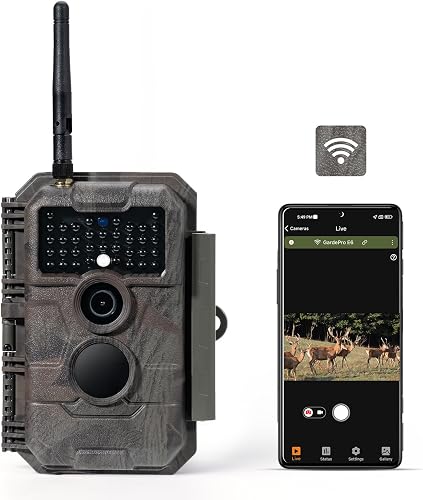
6. GardePro E6 WiFi Trail Camera
Best for: Real-time viewing at close range.
The E6 offers a live view feature that lets you see what is in front of the lens in real time through the app. It uses an external antenna to maintain a stable connection up to 45 feet away. This is perfect for checking that your camera is positioned correctly before you leave.
If you’re trying to connect via a home router, a laptop, or a web browser, the camera will fail to link. The E6 relies exclusively on a direct Bluetooth and WiFi handshake with your smartphone. Attempting to bridge this to a cellular network or a home WiFi system is impossible.
The 940nm no-glow LEDs keep the camera invisible to wildlife during night recording. It isn’t for users who need to view footage from outside the 45-foot range. If you need remote access from a different city, this device isn’t the right choice. Use the GardePro SP350 solar panel if you’re worried about battery life in remote areas, as it provides continuous power for long-term monitoring.
Pros
- Real-time live view feature
- Stable connection with external antenna
- Invisible no-glow night vision
Cons
- Short-range wireless connectivity
- No cellular data support
7. SPYPOINT FORCE-4K Trail Camera

Best for: High-definition video recording.
This model captures 4K video with sound, providing the clarity needed for detailed wildlife pattern analysis. Its 66-degree field of view covers more ground than standard lenses, which minimizes blind spots and provides better context regarding animal behavior. The 48MP setting provides high-resolution images for detailed wildlife monitoring. You can verify these captures immediately on the two-inch color LCD screen, which also serves as the interface for configuring your settings.
Because this is a non-cellular device, you retrieve your SD card to view your data. This simplicity is a major advantage for users who prefer manual data collection, but it means you must physically visit the camera to check your intel. If you require real-time alerts or remote management from your phone, this model won’t meet your needs.
Pros
- High-definition 4K video recording
- Wide 66-degree field of view
- Built-in LCD viewing screen
Cons
- No cellular connectivity
- Low-glow LEDs may be visible to wildlife at night
How to Choose the Best Night Vision Trail Camera
Does connection type really matter?
Yes, it changes how you manage the device. Cellular cameras like the Tactacam Reveal X 3.0 or SPYPOINT Flex-M send photos to your phone anywhere, but they require monthly data plans. Non-cellular models are simpler to use and often last longer on batteries, but you must physically visit the camera to retrieve your files. If you need real-time alerts for property security, choose cellular. If you’re scouting a private woodlot where you visit weekly, a non-cellular unit is a practical choice.
What should I skip if I am a beginner?
Skip models with complex app integrations if you aren’t comfortable with technology. Cameras with built-in LCD screens and simple SD card storage, such as the WOSPORTS or SPYPOINT FORCE-4K, are much easier for first-time users. You avoid the frustration of setting up accounts, pairing Bluetooth, or troubleshooting network signals. If you just want to see deer on your local trail, a non-cellular camera with a screen is usually the most reliable way to start without added headaches.
What must I confirm before ordering?
Confirm whether your chosen camera includes an SD card. Some models, like the MAXDONE, include a pre-installed card, while others require you to buy one separately. Check the power requirements carefully. While many run on 8 AA batteries, some perform better with external solar panels or dedicated lithium packs to avoid frequent maintenance. If you choose a cellular model, verify the carrier coverage in your specific area; dual-SIM cameras like the Tactacam or SPYPOINT Flex-M are safer bets if you’re unsure which network provides the strongest signal at your location. Finally, ensure you have the necessary batteries or power accessories in your cart so you’re ready to set up immediately upon arrival.
Related guides
Frequently Asked Questions
What kind of maintenance does a trail camera require?
Maintenance involves checking battery levels and cleaning the lens. For cellular models, ensure your subscription remains active to receive alerts. If using a solar-powered model, clear debris from the panel to maintain charging efficiency.
What is the first thing that usually goes wrong?
Battery life issues are common, especially in cold weather. Lithium or solar-powered options extend the time between maintenance visits. Improper placement, such as facing the sun or moving branches, also causes false triggers and drains power.
Is the simplest model on the list enough?
A non-cellular camera is sufficient for most hobbyists and backyard users. If your goal is simply to observe wildlife or monitor a garden, you do not need a cellular data plan. Only upgrade to cellular models if you require real-time alerts or remote management.
How do I ensure the camera stays hidden?
Using a no-glow infrared model is the best way to keep your camera stealthy at night. These cameras use 940nm LEDs that are invisible to humans and animals. Mounting the camera higher at a downward angle helps it blend into the background.


