
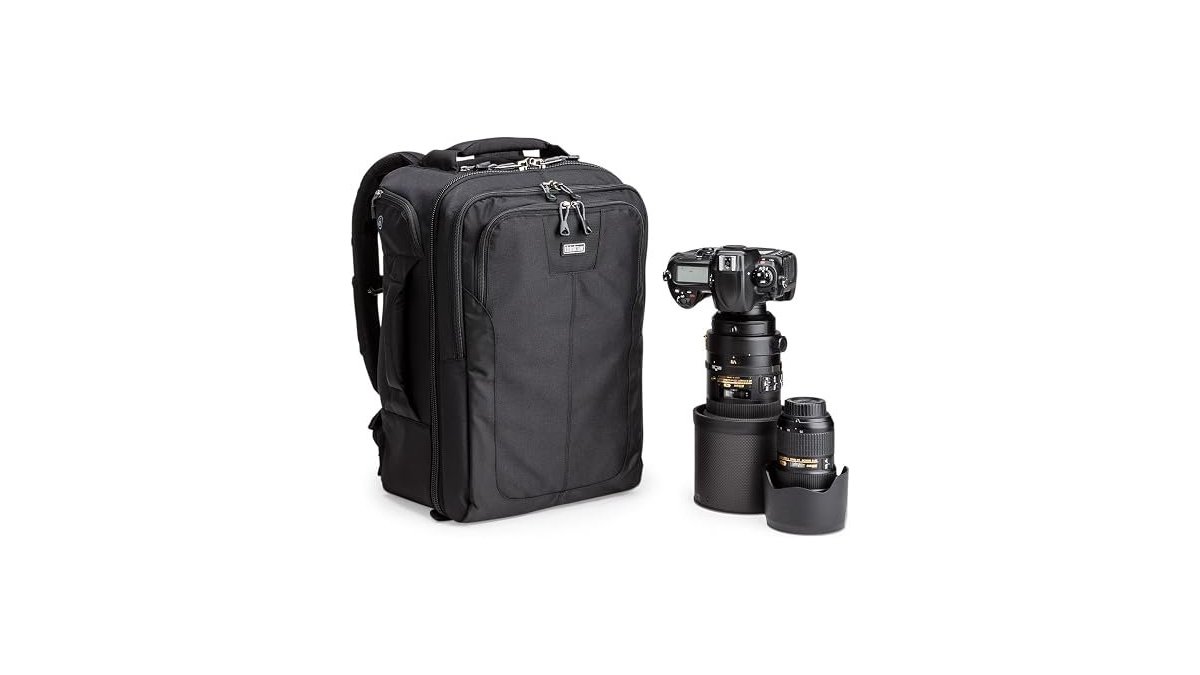
Choosing the right bag depends on how you travel and how much gear you carry. These options differ mostly in their structure, ranging from soft, versatile packs to rigid hardshell designs. Whether you prioritize quick access to your camera or maximum protection for delicate lenses, one of these picks will fit your needs.
Best overall: Think Tank Airport Commuter, because it hits the sweet spot for international carry-on requirements while keeping camera gear locked down with its unique cable system. Best for the frequent flyer: PGYTECH 2-in-1 Roller, because its removable wheels and spinner suitcase mode offer the most flexibility when moving through busy airports or tight city streets. Best for heavy-duty protection: NANUK N-PVD 40L, because its hardshell construction and water-resistant materials provide a level of security for high-end equipment that soft bags simply can’t match.
The rest of this guide is for photographers looking to transport their kits safely without sacrificing convenience.
How We Picked
We compared 16 different camera backpack listings to find the most capable options for modern travel. To earn a place here, a bag had to clearly state its dimensions, storage capacity, and specific security features like locking zippers or weather-resistant materials. We removed any products that lacked clear details regarding laptop compatibility or internal organization, as these are critical for a travel-ready bag. Our focus remained strictly on the manufacturer’s provided specifications to ensure accuracy for every reader.
1. Think Tank Airport Commuter Backpack

Best for: International travelers needing carry-on compliance.
This bag is built for those who take their gear on planes often. It meets most international and US carry-on requirements, which saves you from checking your delicate lenses. The inclusion of a cable lock and locking YKK RC Fuse zippers provides added security when you leave your bag in a hotel room or on a train.
The interior is designed to hold a pro camera and photo gear, with dedicated spots for a 15-inch laptop and a 10-inch tablet. Because the bag weighs between 3.5 and 4.2 pounds depending on how you set it up, it stays manageable for long days. It isn’t for the minimalist who only carries a single camera body, as the internal dimensions are optimized for a larger, multi-lens kit.
Pros
- Meets most airline carry-on standards
- Includes secure cable lock system
- Holds 15-inch laptop securely
Cons
- Weight varies based on accessories
- Not for minimal camera setups
2. VANGUARD VEO Metro B30L Camera & Everyday Backpack (Black)

Best for: Creators who need a hybrid daily bag.
The Vanguard VEO Metro B30L works well because it converts from a camera bag to a standard daypack. You can pull out the upper section to make more room for personal items, which is helpful if you’re spending time away from your camera. It fits a full-frame camera with a 70–200mm lens, making it a strong choice for serious shooters.
The bag features a dual-access system, meaning you can grab your gear from the rear, side, or top. If you need to stay organized, the dedicated 17-inch laptop compartment is a major plus. This bag isn’t for someone who finds adjustable dividers complicated, as you’ll need to spend time setting them up to get the most out of the internal space.
Pros
- Converts from camera to daypack
- Fits up to 17-inch laptop
- Multiple camera access points
Cons
- Requires divider setup time
- Airline compatibility depends on carrier
3. PGYTECH 2-in-1 Roller Camera Backpack Camera Bag

Best for: Travelers moving through flat urban areas.
The PGYTECH 2-in-1 Roller is a unique solution because it acts as both a backpack and a spinner suitcase. The wheels are silent and can be taken off quickly, which helps when you need to switch modes. The handle is tilted backward to keep the bag from tipping over, a design choice that adds significant stability when the bag is fully loaded.
If you’re navigating smooth airport terminals or city sidewalks, use the spinner mode to save your back. Switch to the backpack mode when you encounter stairs or uneven outdoor terrain where wheels become a burden. The integrated base further ensures the bag remains upright, preventing the common frustration of luggage tipping forward during transit.
The main compartment uses a DIY divider system, and there’s an extra 10L expandable front section for clothes or gimbals. It even includes a separate digital organizer bag to speed up your trip through airport security. The splash-proof PU fabric and YKK zippers protect your gear from sudden weather shifts. Use the hidden AirTag pocket to track your bag if you’re forced to gate-check it.
Pros
- Transitions between roller and backpack
- Includes digital accessory organizer
- Stable, non-tipping handle design
Cons
- Wheels add weight to carry
- Not meant for rugged trails
4. NANUK N-PVD 40L Duffle Camera Bag

Best for: Professionals carrying multiple camera bodies.
If you need maximum protection, the NANUK N-PVD 40L is built with a compression-molded EVA foam base. It holds up to three camera bodies and large lenses, keeping them safe from impacts during travel. The hardshell design allows the bag to stand upright under load.
You can carry it like a duffle or hide the straps to wear it as a backpack. It also features YKK AquaGuard zippers and water-repellent finishes to keep your gear dry in bad weather.
If your kit is limited to a single body and a prime lens, this 40L bag will feel like overkill. The rigid shell adds weight that you don’t need for smaller setups. Use this bag when you’re hauling a drone, a 16″ laptop, and multiple bodies simultaneously.
If you’re flying, check your airline’s specific dimensions first. While this bag is designed to be carry-on friendly, the hardshell structure doesn’t compress into tight overhead bins like a soft-sided pack.
Pros
- Hardshell base protects against impacts
- Holds multiple bodies and lenses
- Stowable straps for travel
Cons
- Rigid structure is bulky
- Not for lightweight, compact kits
5. K&F Concept 30L Backpack

Best for: Photographers needing customizable internal space.
The K&F Concept 30L Backpack offers a large capacity that fits well for long photography trips. Its three-tiered compartment system lets you change the interior layout to match your specific lenses and camera bodies. The side opening is a highlight, allowing you to grab your camera quickly without putting the whole bag on the ground.
It also includes a dedicated space for a 16-inch laptop, making it a good choice for those who edit photos on the move. The thick back padding and generous shoulder straps are designed to keep you comfortable even when the bag is full. This bag isn’t for someone who needs a compact, low-profile bag, as its 30L size is quite noticeable.
If you’re hiking in unpredictable weather, use the included rain cover to protect your gear. For those carrying a tripod, use the dedicated side compartment with its strap and buckle to keep the weight balanced. If you find the bag feels too heavy, adjust the interior padding to shift the center of gravity closer to your back.
Pros
- Large 30L capacity
- Easy side camera access
- Fits up to 16-inch laptop
Cons
- Large profile may be bulky
- Requires manual adjustment of dividers to secure smaller lenses
6. Bagsmart Camera Backpack

Best for: Those wanting a lightweight, ergonomic carry.
The Bagsmart Camera Backpack is built with puffy, water-resistant fabric that provides 10mm of shock-absorbing foam for your gear. It’s an excellent choice if you want something that doesn’t look like a traditional, bulky camera bag. The dividers are removable, so you can easily turn it into a regular bag for school or work.
It includes a luggage strap on the back to slide over a suitcase handle, which makes navigating airports much easier. You can fit a 13.6-inch laptop in its own compartment, keeping your electronics separate from your camera. This bag isn’t for photographers who carry a massive kit of lenses, as its smaller size is built more for single-camera setups.
If you’re shooting on the go, use the side quick-grab pocket for instant access to your camera. If you’re commuting, remove the internal dividers to maximize space for personal items. You should choose this bag if your gear fits within the 10″ x 5.5″ x 13.8″ dimensions. If you carry a full-sized tripod or multiple professional lenses, this compact frame will likely be too restrictive for your daily needs.
Pros
- Lightweight and comfortable design
- Converts to everyday bag
- Includes luggage handle strap
Cons
- Limited capacity for large kits
- Fits smaller laptops only
7. RAINSMORE Vintage Camera Bag with Side Access

Best for: Photographers who value classic style.
The Rainsmore Vintage Backpack stands out for its 15mm velvet lining and 360-degree padding, which provides a high level of protection for delicate lenses. It fits a 15.6-inch laptop and has plenty of small pockets for batteries and SD cards. The vintage canvas look is durable and water-resistant, making it a good partner for long-term use.
Use the six removable padded dividers to configure the 25L interior. If you carry one DSLR and three to five lenses, keep the dividers installed. If you’re traveling without gear, remove them entirely to convert the bag into a standard daypack.
The side access pocket is very convenient for grabbing your camera without opening the main compartment. It also includes bottom straps for a tripod, keeping your hands free while walking. If you’re trekking through heavy rain, pull out the included waterproof cover to ensure your gear stays dry. This bag isn’t for someone who needs a modern, technical aesthetic, as its design is strictly vintage-focused.
Pros
- Thick velvet-lined interior protection
- Includes dedicated tripod straps
- Convenient side camera access
Cons
- Vintage style may not suit everyone
- Heavier empty weight
How to Choose the Best Travel Camera Bag
Does the bag meet airline size limits?
Always check the official International Air Transport Association guidelines for carry-on luggage before you fly. Most airlines have specific size limits that change based on your ticket class and the aircraft type. A bag might be marketed as “travel-ready,” but that doesn’t guarantee it will fit in every overhead bin. Always measure your bag once it’s fully packed to ensure it doesn’t bulge past the allowed dimensions.
Should I choose a hardshell or soft bag?
A hardshell bag like the NANUK N-PVD 40L offers superior impact protection for lenses and camera bodies. If you travel to remote areas or carry heavy, fragile equipment, the rigid shell provides increased durability. Soft bags like the Bagsmart Camera Backpack are lighter and more flexible for daily city use.
Is camera access more important than total capacity?
If you frequently shoot in fast-moving environments, look for a bag with side or top access points like the K&F Concept 30L Backpack. These allow you to reach your camera without setting the bag down or opening the entire main compartment. If you’re traveling for a long trip and need to carry clothes, a drone, and multiple lenses, prioritize a bag with a large, flexible capacity over quick-access features. Most photographers find that a balance of both is ideal for travel.
Frequently Asked Questions
What happens if the bag gets wet?
Most bags listed, like the Rainsmore Vintage Backpack, feature water-resistant materials and often include a rain cover. These covers provide essential protection during heavy rain to keep camera electronics safe. Always verify if the cover is included, as some models require a separate purchase.
Can I carry my laptop and camera in the same bag?
Yes, most modern camera backpacks include a dedicated, padded laptop compartment. Models like the Vanguard VEO Metro B30L and Think Tank Airport Commuter are built to house both camera gear and computers. Always check the internal dimensions to ensure your specific laptop size fits comfortably.
What is the first part to wear out on these bags?
High-quality bags use reinforced YKK zippers to prevent teeth from separating or jamming after repeated use. To extend the life of your bag, avoid overstuffing the compartments beyond their intended capacity, which puts unnecessary stress on the stitching. If you notice a zipper sticking, clean it gently to remove any dust or debris that might be causing the issue.
Is the simplest bag on this list enough for a beginner?
A simpler bag like the Bagsmart Camera Backpack is ideal for beginners building their gear collection. These bags provide essential shock absorption and organization without the complexity of advanced security systems. As your kit grows and you travel to challenging environments, you may eventually require more technical packs.


