
Finding the best horse hoof ointment depends on your horse’s environment and needs, with choices splitting between Carr & Day & Martin for daily conditioning and Pure Sole Hoof Clay for intensive repair. You must decide if the hoof requires deep moisture for brittle walls or a barrier against wet-weather issues like thrush, while considering whether you need daily maintenance or a specialized treatment for existing cracks.
As an Amazon Associate, we earn from qualifying purchases. This post contains affiliate links – if you buy through them, we may earn a commission at no extra cost to you.
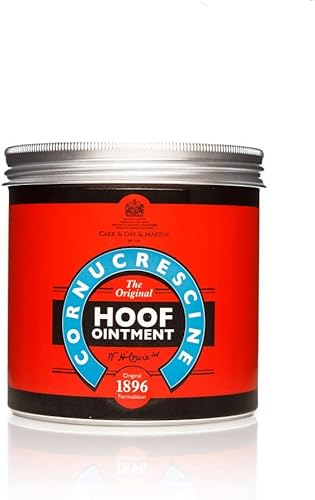
1. Carr & Day & Martin Cornucrescine Hoof Ointment
Best for: A horse owner needing reliable daily moisture for healthy hooves.
This ointment is designed to support healthy growth and maintain the condition of the hoof. It’s a straightforward, clear formula that aims to keep the hoof in its best state through regular use. Its packaging is specifically designed for easy storage in your tack room or grooming kit.
The 500 ml container is sized for frequent application without taking up too much space. Because it focuses on overall maintenance, it’s a great choice if you’re simply looking to keep your horse’s feet in good shape throughout the seasons. The listing doesn’t mention if it is suitable for thrush or deep-seated hoof wall separations.
Good if:
- You want a simple, daily maintenance routine.
- You prefer a clear, non-staining formula.
- You need a product that stores easily.
Skip it if:
- Your horse currently has active hoof infections like thrush.
- You need a formula with specialized, deep-penetrating oils.
2. Absorbine Hooflex Therapeutic Conditioner Ointment

Best for: Owners who want a long-standing, professional-grade conditioner for various equines.
This conditioner is formulated to restore and protect the most important parts of the hoof, including the frog, sole, and coronary band. It creates a breathable moisture balance, which helps maintain the natural pliability of the entire hoof. It’s suitable for horses, ponies, donkeys, and mules.
Having been recommended by farriers for over 70 years, this product is built on a long history of use. The formula is designed to prevent the dryness that leads to cracking. The listing doesn’t mention if it acts as a sealant against mud or water.
Good if:
- You want a product with a long track record.
- You have multiple types of equines to care for.
- You need to maintain moisture in the frog and sole.
Skip it if:
- You need a heavy-duty sealant for muddy paddock conditions.
- You’re looking for a specialized clay for deep cracks.
3. Farnam Horseshoer’s Secret Deep-Penetrating Hoof Conditioner 32 Ounces

Best for: Horses with dry, brittle hooves that need deep hydration.
This formula uses avocado oil, glycerine, and mineral oils to penetrate deeply into the hoof. It’s designed to stimulate collagen production at the coronary band, which supports stronger growth. It’s particularly helpful for maintaining flexibility in horses that go barefoot.
Because it’s designed to lock in moisture, it works well in both dry summers and cold, harsh winters. It’s a daily maintenance product meant to prevent cracks before they start. It doesn’t provide the thick, protective barrier that a clay-based product offers for wet conditions.
Good if:
- You have a barefoot horse that needs extra resilience.
- You live in an area with extreme seasonal weather changes.
- You want to promote healthier hoof wall structure.
Skip it if:
- You’re dealing with active hoof rot or thrush.
- You need a thick, paste-like barrier to stay on in wet mud.
4. Effol Hoof Ointment

Best for: Owners who prioritize moisture retention with added antibacterial properties.
This ointment is known for its ability to help prevent hoof diseases while offering soothing, antibacterial benefits. It contains ingredients like laurel and thyme to help keep the hoof healthy. The formula acts as a protective barrier, maintaining the integrity of the hoof wall. It’s a versatile choice for those who want one product that addresses both moisture and hygiene.
Choose the 500ml container for occasional use or the 5-litre bucket if you manage a full barn. If you notice the hoof wall becoming brittle, the ointment’s vaseline base provides the essential seal needed to lock in existing moisture. However, it doesn’t provide the same deep-penetrating nutrient profile as thinner, oil-based conditioners.
If your horse spends significant time in damp, muddy conditions, apply this daily to maximize the antibacterial protection. If the hooves appear dry and prone to cracking, apply it immediately after a bath while the hoof is still slightly damp. Avoid using this as a substitute for clay-based treatments when dealing with deep sulcus infections, as the ointment is designed for surface protection rather than packing.
Good if: * You want to combine moisture with antibacterial support. * You prefer having options for different container sizes. * You need a product that’s easy to apply regularly.
Skip it if: * You’re looking for a specific, non-staining clear treatment. * You need a clay-based product for deep sulcus cracks.
5. Manna Pro Cut Heal Hoof Heal

Best for: Quick and easy routine hoof maintenance.
This versatile dressing and conditioner helps maintain a healthy hoof environment. It’s designed as an all-weather formula that remains effective in various climates. The brush-on application makes it simple to integrate into your daily grooming routine.
It focuses on keeping the moisture balance optimal, which prevents the hoof from becoming too dry or brittle. Because it’s a general-purpose conditioner, it’s best suited for horses that don’t have major structural issues. If you notice the hoof wall is already crumbling or the sole is soft, look for a targeted medical treatment instead. This product isn’t intended to fill deep cracks or act as a cure for thrush.
Use this product when the hoof is generally sound but needs a protective barrier against the elements. If the hoof shows signs of infection or deep structural damage, this dressing won’t provide the necessary medical intervention.
Good if: * You want a simple, all-weather grooming tool. * You prefer a convenient brush-on application. * You need a reliable, everyday maintenance product.
Skip it if: * You’re treating specific issues like white line disease. * You need a deep-penetrating oil for very dry, hard hooves.
6. Pure Sole Hoof Clay

Best for: Tackling thrush, deep sulcus cracks, and wet-weather hoof problems.
This is a thick, creamy clay designed specifically for horses that deal with smelly feet or white line issues. It stays in place even in wet, muddy conditions, providing a protective barrier where the hoof needs it most. It’s made with natural ingredients like bentonite clay, oregano oil, and lavender.
Unlike some treatments, this clay is non-caustic and won’t sting or stain your hands. It’s easy to spread and can be used beneath shoes and pads. It isn’t a daily conditioner for the entire hoof wall, but rather a targeted treatment for problem areas.
Good if:
- You’re fighting thrush or deep sulcus cracks.
- Your horse lives in wet, muddy conditions.
- You want a non-staining, easy-to-apply hoof treatment.
Skip it if:
- You only need general moisture for a healthy hoof.
- You’re looking for a liquid dressing for the coronary band.
7. Flagline Horse Health Pine Tar

Best for: Using a traditional, natural antiseptic to manage hoof health.
This pine tar treatment acts as a natural topical antiseptic to support overall hoof health. It helps retain moisture in the hoof wall, which is vital for preventing the cracks and splits that occur in dry environments. It’s also effective at restoring moisture to hardened frogs.
Because it’s a natural product, it’s a popular choice for those who prefer traditional methods of hoof care. It creates a flexible barrier that helps the hoof adapt to environmental changes. It’s quite thick and may require more effort to apply evenly compared to liquid conditioners.
If your horse spends time in arid climates, apply this 32-fluid-ounce treatment daily to maintain the wall’s natural pliability. If the hoof is already brittle, use it to seal in existing hydration before the damage worsens.
Good if: * You prefer natural, traditional ingredients for hoof care. * You need to soften hard, dry frogs. * You want to prevent cracking through improved flexibility.
Skip it if: * You’re looking for a non-sticky or fast-absorbing treatment. * You need a specialized product for active thrush infections.
Choosing the Best Horse Hoof Ointment
Most of these products fall into two categories: daily conditioners and targeted treatments. Products like Carr & Day & Martin, Farnam Horseshoer’s Secret, and Manna Pro Hoof Heal serve the same purpose of general maintenance. They’re intended to keep the hoof supple and prevent future issues. If your horse has healthy hooves, any of these will likely serve you well. The choice often comes down to the specific application method you prefer, such as a brush-on versus a traditional ointment.
Conversely, Pure Sole Hoof Clay stands apart as a specialized treatment. It isn’t for general conditioning but for fixing specific problems like thrush, deep sulcus cracks, or white line issues. You should use this when you need focused coverage in crevices where standard ointments might not settle. If you apply it and the clay becomes dry, simply add a small amount of water to restore its spreadable texture.
Effol Hoof Ointment and Flagline Horse Health Pine Tar occupy a middle ground. They offer maintenance with added antibacterial or antiseptic properties. Use these if you want to support moisture balance while simultaneously preventing hoof diseases. If your horse has an active infection, choose the targeted clay; if you’re performing routine grooming for a healthy horse, choose the daily conditioner.
Still Not Sure?
How often do I really need to apply this?
Consistency is the most important factor for success. For daily maintenance, you should aim to apply a conditioner like Farnam Horseshoer’s Secret every day, especially after grooming. If you’re using a treatment like Pure Sole Hoof Clay, you may only need to apply it when you see signs of cracks or thrush. Always check your horse’s feet before you ride to see if the product is still present.
What do I already own that this has to work with?
Think about your current grooming kit. If you already have brushes for applying liquids, a product like Manna Pro Hoof Heal will be an easy addition. If you’re struggling with mud in your turnout, you need a barrier product like Pure Sole Hoof Clay that can handle wet conditions. Ensure your chosen product is compatible with any shoes or pads your horse currently wears.
What am I most likely to regret choosing?
The most common mistake is buying a general conditioner when you actually need a targeted treatment. If your horse has deep cracks or smelly feet, a simple moisturizer like Carr & Day & Martin won’t be enough to fix the issue. Conversely, don’t buy a thick clay for a horse that just needs simple hydration, as it will be messy and unnecessary.
Maintaining your horse’s feet is essential for their long-term soundness and comfort in various environments. For daily moisture and general health, Carr & Day & Martin remains a top choice for its reliability. If you’re battling wet-weather issues like thrush, Pure Sole Hoof Clay provides the focused care needed to keep the hoof clean and protected. Consult with your farrier to ensure your chosen approach aligns with your horse’s specific hoof structure, as detailed by the American Association of Equine Practitioners.
Frequently Asked Questions
Is it safe to use these on a horse that’s barefoot?
Yes, many of these products are specifically designed for barefoot horses. Farnam Horseshoer’s Secret is a great option here, as it helps maintain the flexibility and resilience needed for horses with increased ground contact. Always ensure the hoof is clean and dry before applying any product to ensure it adheres properly to the hoof wall or sole.
Can I use these products if my horse wears metal shoes?
Most of these ointments and clays are perfectly safe to use with shoes. Pure Sole Hoof Clay can even be applied beneath shoes and pads to provide extended care in the grooves where it’s needed most.
How do I know if my horse needs a conditioner or a treatment?
If the hoof looks dry, brittle, or has small surface cracks, a conditioner like Absorbine Hooflex Therapeutic is the right choice to restore moisture. If you notice a bad smell, black discharge, or deep cracks in the frog or sulcus, you need a treatment like Pure Sole Hoof Clay. General maintenance is for prevention; treatments are for active issues.
Should I apply these products to the whole hoof or just the wall?
It depends on the product’s purpose. Conditioners like Carr & Day & Martin are often applied to the entire hoof wall and coronary band to support overall growth. However, targeted products like Pure Sole Hoof Clay should be applied specifically to the sole, frog, and grooves where the issue is located. Read the label carefully, as some formulas are meant for the wall while others are for the sole.
Conclusion
Before you settle on a final choice, observe your horse’s hooves after a few days of dry weather. If the texture doesn’t improve, don’t hesitate to ask your farrier for their professional recommendation. They’ll help you spot hidden issues, ensuring your horse stays comfortable and sound for every ride ahead.


