
Choosing the right SD card for your trail camera depends on how much video you record and how often you visit your camera. While all cards here fit standard slots, they differ in durability, write speeds, and total storage capacity, which dictates how many high-resolution files you can save before needing a swap.
Best overall: SanDisk Ultra 32GB is a dependable choice for general trail camera use, providing the consistent performance needed to store your wildlife photos and videos reliably. Best for heavy users: GardePro 64GB SD offers high capacity for 4K video recording, making it the right pick if you need to capture long sessions of high-bitrate footage. Best for durability: Gigastone Camera Pro features a rugged design that’s waterproof, temperature-proof, and shock-proof, ensuring your data stays safe in harsh outdoor and field environments.
This guide is for hunters and wildlife observers who need reliable storage for their camera traps.
How We Picked
We compared 16 different SD card listings to find options that serve various needs in the field. To earn a spot, each card had to clearly state its storage capacity, speed class, and compatibility with standard trail camera devices. We excluded cards that lacked clear technical specifications or didn’t explicitly mention compatibility with common game camera brands. Our selections prioritize cards that balance data integrity with the specific demands of outdoor wildlife monitoring.
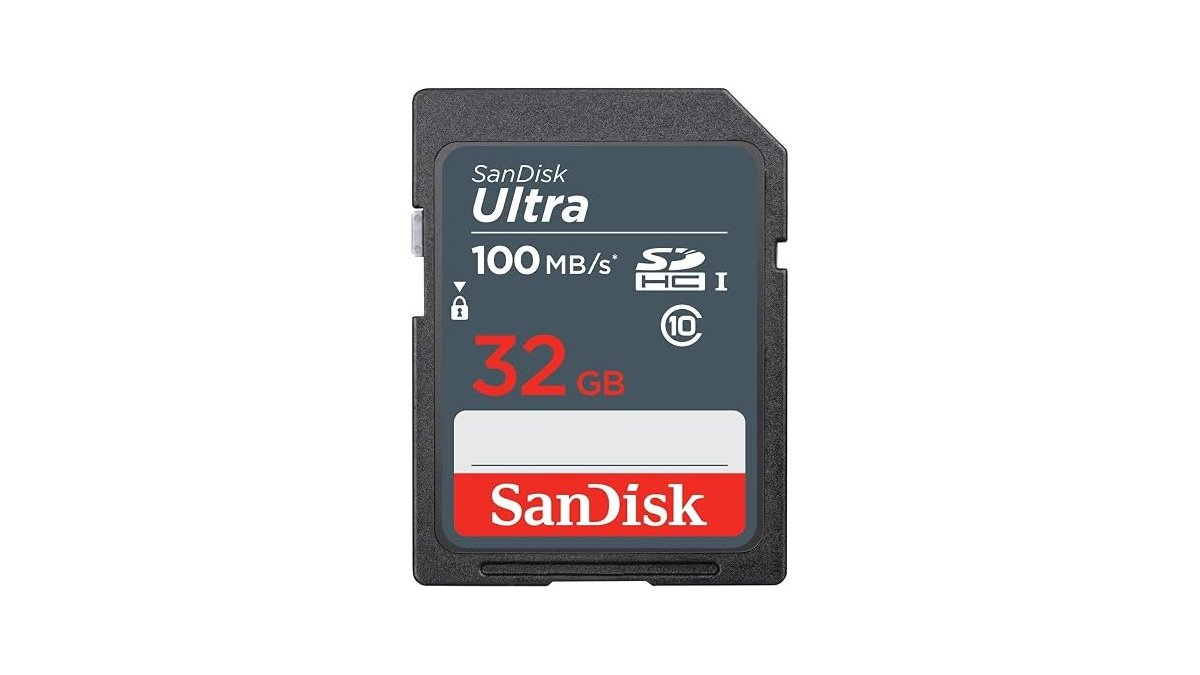
1. SanDisk 32GB Ultra 100MBs SDHC Memory Card

Best for: General wildlife monitoring and scouting.
The SanDisk Ultra 32GB is designed for users who need a standard, reliable storage solution for their trail cameras. Its 32GB capacity is a sweet spot for most hunters, allowing you to store thousands of photos without constant maintenance.
Because this card is built for standard SDHC devices, it works with most cameras on the market today. It’s a straightforward option for those who want a “plug and play” experience without worrying about complex settings or high-end video requirements.
If your camera captures only still images, this card is your best choice. However, if you plan to record long 4K video clips, choose a card with a higher speed rating. Using this standard card for high-bitrate video may result in dropped frames or write errors.
If you prioritize video, the risk of a mistake is a corrupted file or a camera that stops recording mid-clip. For simple scouting, stick to this unit to keep your setup efficient.
Pros
- Reliable storage for photos
- Compatible with most cameras
- Standard 32GB capacity
Cons
- Lacks high-bitrate video focus
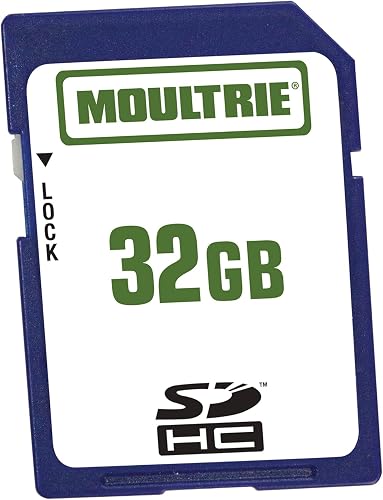
2. Moultrie SD Memory Card
Best for: Moultrie camera owners.
This card is built specifically for users of Moultrie game cameras, ensuring seamless integration with devices made from 2007 onwards. It includes a physical write-protect switch, which is a helpful feature for preventing accidental deletion of your images while you’re in the field. Slide the switch to the locked position before inserting the card into a reader to ensure your files remain untouched.
The card is designed to be erased and reused many times without losing quality. This is ideal if you rotate cards between different camera locations. If you’re using a device that isn’t SDHC compatible, this card won’t function; always check your camera manual for the SDHC logo before purchasing.
If you don’t own a Moultrie camera, you might prefer a more universal option, though it will still work in any SDHC-compatible device.
Pros
- Includes write-protect switch
- Durable for repeated reuse
- Optimized for Moultrie cameras
Cons
- Specific brand optimization
- Requires SDHC compatibility
3. STEALTH CAM SD Card

Best for: Extended outdoor scouting trips.
The Stealth Cam 32GB comes in a convenient two-pack, which is perfect for swapping cards in the field so you never have to leave a camera empty. It features a class 10 speed rating, ensuring it can handle high-resolution image capture and video recording without issues.
The low power consumption design is a major benefit for cameras running on limited battery sources in remote areas. This card is built to handle the rigors of outdoor use, keeping your data secure in various weather conditions.
If you’re setting up a camera for a week-long scouting trip, the 32GB capacity is ideal. However, if you’re recording high-definition video at a high-traffic location, you should swap these cards every three days to avoid overwriting your footage.
This card isn’t intended for users who require massive storage blocks, as this pack focuses on mid-range capacity.
Pros
- Convenient two-pack bundle
- Low power consumption design
- Class 10 speed rating
Cons
- Limited to 32GB capacity
4. GardePro 64GB Full-Size SD Card

Best for: High-resolution 4K video recording.
The GardePro 64GB SD is built for the most demanding trail cameras that record in 4K resolution. With V30, U3, and Class 10 ratings, it provides the fast write speeds necessary to keep video files smooth and stable. Using a lower-rated card often results in dropped frames or corrupted files during high-bitrate recording.
The industrial-grade components mean this card is designed for long-term reliability in harsh outdoor environments. Because it holds 64GB, you can leave your camera in the woods for longer periods without worrying about running out of space.
If you’re only capturing still photos, this card is likely overkill. However, for video-heavy setups, the 100MB/s read speed ensures you minimize waiting during file transfers.
Pros
- Supports 4K video recording
- High 64GB storage capacity
- Industrial-grade component durability
Cons
- More than needed for basic photo-only cameras
5. 【5-Yrs Free Data Recovery】 GIGASTONE 32GB SD Card

Best for: Extreme weather and environment conditions.
The Gigastone Camera Pro is built to survive almost anything, with ratings for being waterproof, temperature-proof, and shock-proof. If you place your cameras in swampy areas, high mountains, or extreme heat, this card is designed to protect your data from those environmental hazards.
It also comes with a five-year limited warranty, which provides extra security for your equipment. The 100MB/s transfer speed ensures that you can quickly move files to your computer once you get home. This card is best for users who prioritize physical data protection over raw storage size.
Pros
- Waterproof and temperature-proof
- Five-year limited warranty
- Fast 100MB/s transfer speed
Cons
- Standard 32GB capacity
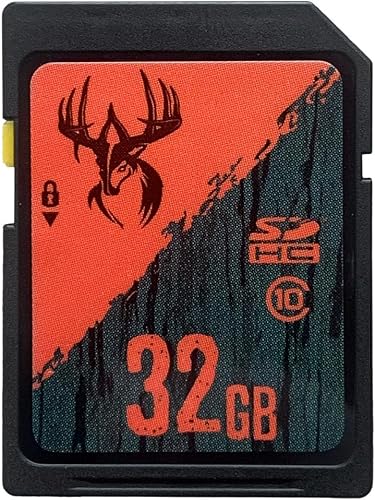
6. WILDGAME INNOVATIONS 32GB SD Memory Card 10MB/Sec Class 10 SD
Best for: Quick and easy setup.
The Wildgame Innovations 32GB card is designed to work the moment you take it out of the box. It is built to provide the rapid data transfer necessary for capturing high-resolution photos and HD videos without the frustration of buffering. You can expect write speeds of up to 10MB per second.
Because it’s compatible with most SD-compliant devices, it’s a versatile choice for anyone with a mix of different camera brands. It holds approximately 14,000 images from a 10-megapixel camera, which is plenty for most scouting needs. If you’re using a camera with a higher megapixel count, expect that total image capacity to drop accordingly.
This card isn’t designed for advanced 4K video workflows, so it should be kept for standard HD and photo-based cameras. Stick to standard high-definition settings to ensure the card maintains its reliable performance.
Pros
- Simple plug and play
- High-speed class 10 rating
- Compatible with most cameras
Cons
- Not for 4K video
7. PNY 32GB Elite U1 V10 SDHC Trail Camera Flash Memory

Best for: Multiple camera setups.
The PNY Elite 32GB comes in a three-pack, making it the most efficient way to equip several cameras at once. It features a V10 video speed rating, which is specifically tuned to ensure that your 1920×1080 HD video footage is captured without interruptions.
If you’re managing a network of trail cameras, this bundle prevents the common mistake of mixing mismatched storage media.
Like other rugged options, it’s built to be shock, temperature, and waterproof. It also resists X-rays, vibration, and humidity to ensure it stands up to the elements. This is an excellent choice for users who manage a large number of cameras and need a consistent, reliable supply. It isn’t the right pick for a single-camera user who only needs one card.
Pros
- Three-pack value bundle
- V10 video speed rating
- Highly durable construction
Cons
- Not for single-camera needs
How to Choose in Sixty Seconds
Which speed class do I actually need?
For most trail cameras, this performance level is the standard requirement. It provides enough speed for high-resolution images and standard HD video. If your camera records in 4K, you must use a card with a V30 or U3 rating to ensure the video files save correctly without buffering. Always check your camera manual to confirm the maximum speed it can support. Using a card that’s faster than your camera requires won’t provide extra benefits.
Does the storage capacity really matter?
Storage capacity determines how long you can leave your camera in the woods before the card fills up. A 32GB card is usually enough for approximately 14,000 images from a 10-megapixel camera. If you record long videos or monitor a high-traffic location, a 64GB card is the better choice. Larger cards fill up slower, reducing the number of trips you need to make to your camera site.
What should I check before I buy?
Always verify if your trail camera requires a standard full-size SD card or a smaller microSD card with an adapter. Most trail cameras use full-size slots, but some compact models require the smaller version. If you choose a 64GB card, confirm your camera supports that capacity; some older models may not be able to read cards larger than 32GB.
Look for features that protect your data in harsh environments. If you’re using the card for extended outdoor adventures, prioritize cards labeled as waterproof, shock-proof, temperature-proof, and x-ray-proof. These ratings ensure your data remains secure even when exposed to the elements. Finally, check for a physical write-protect switch. This simple feature prevents accidental overwrites or deletes, which is a common mistake that can result in the loss of all your captured evidence. Confirming these details prevents the frustration of buying a card that physically doesn’t fit, can’t be read by your device, or fails in the field.
Frequently Asked Questions
Can I use these cards in any trail camera?
Most modern trail cameras are compatible with SDHC cards, such as the SanDisk Ultra 32GB. Always check your camera’s manual for maximum storage limits, as older models may not support capacities exceeding 32GB.
How do I protect my data in the field?
Use cards with high durability ratings, like the Gigastone Camera Pro, which are waterproof and shock-proof. Additionally, use the physical write-protect switch to prevent accidental image deletion while reviewing files in the field.
What happens when an SD card reaches its limit?
When an SD card reaches capacity, your camera will either stop recording or begin overwriting the oldest files. Check your menu for loop recording settings, and perform regular maintenance to clear your card.
Is the simplest card on the list enough?
A standard card like the Wildgame Innovations 32GB is sufficient for photo-based trail cameras. These cards are designed for storing images and standard-definition video, which do not require the high-speed overhead of premium cards.


