
Choosing the right video camera depends on how much gear you want to carry and where you plan to film. While all these options handle 4K 120fps recording, the biggest difference lies in whether you need a portable pocket device, a rugged action camera, or a professional-grade cinema setup.
Best overall: DJI Osmo Pocket 3, because it combines a Large-format sensor. With a built-in 3-axis mechanical gimbal for steady, high-quality footage in a pocket-sized frame. Best for action: DJI Osmo Action 5 Pro, as it offers a rugged, waterproof design with a 4-hour battery life, perfect for long days outdoors or underwater. Best for professionals: Sony Alpha FX3, which is a full-frame cinema camera designed for serious filmmakers who need professional features like 10-bit 4:2:2 and XLR audio inputs.
The rest of this guide is for creators who need high-speed 4K recording to capture smooth slow-motion footage for their projects.
How We Picked
We compared 16 different camera listings to identify which models genuinely support 4K 120fps recording. Each selected camera had to explicitly state its sensor type, stabilization features, and recording capabilities in the manufacturer’s copy. We removed any products that lacked clear technical specifications or failed to provide a complete picture of what is included in the package. Our choices focus on the hardware’s versatility and the specific needs of different types of creators.
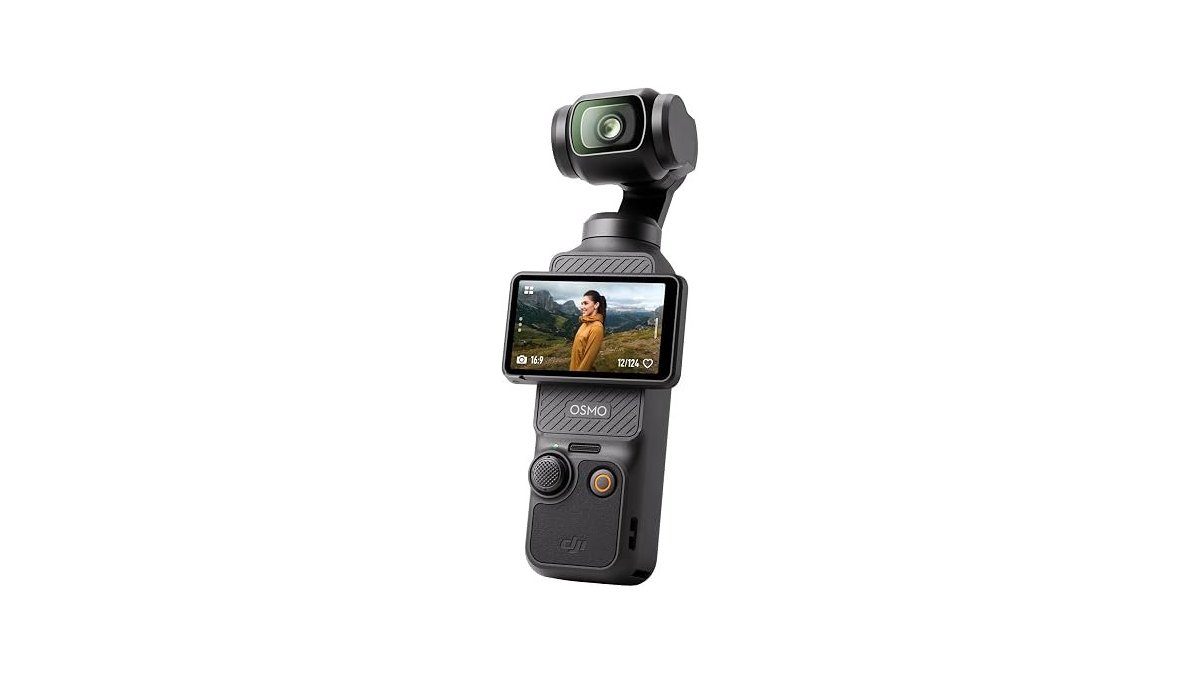
1. DJI Osmo Pocket 3 Vlogging Camera with 1” CMOS &

Best for: Vloggers needing a compact, stabilized camera.
The DJI Osmo Pocket 3 stands out for its 1-inch CMOS sensor, which helps capture clear footage even during night scenes or sunsets. Its 2-inch touch screen rotates to support both horizontal and vertical shooting, making it very versatile for social media creators.
The 3-axis mechanical stabilization ensures your videos stay smooth while you’re moving. It also includes ActiveTrack 6.0 to keep you in the frame while you jump or dance. If you’re filming action-packed scenes, the fast and accurate focusing locks onto your subject to ensure every detail remains sharp.
For those focused on post-production, the 10-bit color depth and D-Log M allow you to record one billion colors. This is the setting to choose if you intend to color grade your footage for a professional aesthetic. However, avoid this camera if you require interchangeable lenses or deep manual controls for cinema-grade film production. The fixed lens design is meant for portability, not modularity.
Pros
- A large-format sensor for professional clarity.
- Rotatable 2-inch touch screen
- Advanced multi-directional mechanical stabilization.
- 4K/120fps recording
Cons
- Fixed lens design
- No interchangeable lens support
2. Sony Alpha FX3

Best for: Serious filmmakers requiring professional cinema quality.
The Sony Alpha FX3 is a full-frame cinema camera built for professional use. It includes an XLR handle unit, which is vital for capturing high-quality audio, and a dual-battery charger to keep you powered during long shoots.
This camera supports 10-bit 4:2:2 and 16-bit RAW output, giving you immense flexibility in post-production color grading. It also features 5-axis stabilization to help keep handheld shots steady. If you need to shoot 4K at 120p, this camera delivers the high frame rate required for smooth slow-motion sequences.
Use this camera if your workflow demands professional-grade output and advanced audio integration. If you only need a simple device for quick social media clips, the complex menu system and larger physical footprint will likely slow you down. Beginners often make the mistake of underestimating the learning curve of the XLR handle and RAW workflow. If you aren’t prepared to color grade your footage, you won’t see the value in the 16-bit output.
Pros
- Professional full-frame sensor
- Includes XLR handle unit
- 16-bit RAW output support
Cons
- Requires professional-level knowledge
- Larger footprint than pocket cameras
3. DJI Osmo Action 5 Pro Standard Combo

Best for: Outdoor enthusiasts and action sports filming.
The DJI Osmo Action 5 Pro is designed for durability, featuring a waterproof build that works down to 65.6 feet. It includes a massive 50-piece accessory kit, so you have mounts for helmets, bicycles, and tripods right out of the box.
The 4-hour battery life is a standout feature for long recording sessions in the field. It also offers 47GB of built-in storage for extra backup capacity. The bundle includes 12 anti-fog inserts.
Choose this camera if you need rugged reliability for high-motion environments like cycling or climbing. If you require professional XLR audio inputs for studio interviews, look elsewhere. The 1/1.3″ CMOS sensor is optimized for compact action, not controlled studio lighting.
Pros
- Waterproof to 65.6 feet
- 4-hour battery life
- Extensive 50-piece accessory kit
Cons
- Smaller sensor than pocket models
- Not suited for studio audio
4. Canon EOS R6 V Mirrorless Camera Body

Best for: Content creators needing full-frame versatility.
The Canon EOS R6 Mark II features a 32.5MP full-frame sensor and a heat-dissipating magnesium-alloy chassis, allowing for long-form video recording without overheating. Its video-focused design includes a front record button and a tally lamp to help you keep track of your recording status.
The 7.5 stops of in-body image stabilization make it much easier to get steady shots while holding the camera. If you’re filming for podcasts or livestreams, the full-size HDMI terminal and vertical tripod mount provide the professional connectivity you need.
Use the Power Zoom lever if you want smooth focal adjustments during a shot. If you need to capture time-warping footage, switch to the Slow & Fast mode for in-camera effects.
This isn’t for users who want the smallest possible camera to carry in a pocket, as this is a full-size mirrorless body. If your priority is portability, look elsewhere. If your priority is sustained recording performance, this camera is built to handle the heat of long sessions.
Pros
- Full-frame 32.5MP sensor
- Built-in active cooling fan
- 7.5 stops of stabilization
Cons
- Not pocket-sized
- Requires separate lenses
5. DJI Osmo Action 4 Essential Combo

Best for: Users needing reliable performance in cold weather.
The DJI Osmo Action 4 uses a large 1/1.3-inch sensor to provide clear footage in low-light conditions. It’s specifically designed to work in temperatures as low as -20°C, making it a great choice for winter sports or cold-weather travel. The 1770mAh battery lasts up to 150 minutes and works in temperatures as low as -20°C (-4°F).
The magnetic quick-release system makes it very easy to switch between different mounts or vertical and horizontal orientations. Rely on the self-locking design to keep the camera secure during high-impact activities like cycling or underwater filming.
Use the Pre-Rec feature to capture footage 5 to 60 seconds before you hit the record button. This is essential for unpredictable subjects like wildlife or fishing. If you find your footage lacks professional depth, switch to D-Log M to preserve dynamic range for post-production editing.
Pros
- Cold-resistant down to -20°C
- Magnetic quick-release system
- 10-bit color depth
Cons
- Lower resolution than some competitors
- No built-in high-speed storage
6. Canon XA60 Professional UHD 4K Camcorder Lens Kit (Black)

Best for: Professional events and long-form recording.
The Canon XA60 is a dedicated camcorder that excels at capturing distant subjects thanks to its 20x optical zoom lens. It includes professional connectivity options like a mini-HDMI output and UVC support for high-definition live streaming.
If your workflow requires specific file structures, choose XF-AVC for professional editing suites or MP4 for faster, more compatible workflows. You can record 4K UHD at 160Mbps for maximum detail, or drop to Full HD at 45Mbps when storage space is a concern.
The combination of infrared and optical image stabilization ensures sharp footage even when zoomed in. Use the 3.5-inch touchscreen to pull focus quickly, or rely on the tiltable OLED EVF when shooting in bright outdoor environments.
It isn’t for creators who want a compact, lightweight device for handheld vlogging, as this is a traditional camcorder form factor. Avoid this model if your primary goal is portability; its size is built for stability on a tripod rather than movement.
Pros
- 20x optical zoom lens
- Professional connectivity options
- Dual recording formats available
Cons
- Traditional, bulky form factor
- Not designed for casual vlogging
7. Xtra Muse Vlogging Camera

Best for: Creators who need dedicated gimbal-stabilized footage.
The Xtra Muse Vlogging Camera utilizes a 1-inch CMOS sensor to capture 4K video at 120fps. Its integrated 3-axis gimbal stabilizer ensures professional smoothness, whether you’re running, hiking, or dancing. If you require cinematic quality, the 10-bit X-Log color mode provides one billion colors, which is ideal for high-contrast environments like sunrises and sunsets.
Use the 2-inch touch screen to toggle between horizontal and vertical framing. If you’re filming solo, the “Master Follow” feature keeps you centered while you move. Mount the device on a tripod and jump or spin; the camera will track your position automatically.
This camera isn’t for users who need a rugged, waterproof device for deep-water diving or high-impact contact sports. If your environment involves heavy rain or submersion, choose a specialized action camera instead. The Xtra Muse Standard Bundle includes the gimbal, a carrying bag, a wrist strap, and a handle with a 1/4″ thread.
Pros
- Integrated multi-directional gimbal.
- 1-inch sensor
- Includes handle and wrist strap
Cons
- Not waterproof
- Limited to vlogging use cases
How to Choose Your 4K 120fps Video Camera
Which stabilization type is best for me?
If you’re moving a lot, a mechanical gimbal like the one on the DJI Osmo Pocket 3 or Xtra Muse is best because it physically levels the camera. For action sports, digital stabilization found in action cameras like the DJI Osmo Action 5 Pro is more durable since it has no moving parts to break. For professional cinema work, full-frame cameras like the Sony Alpha FX3 use sophisticated in-body stabilization that works well with a wider range of lenses.
Does the sensor size really matter?
Yes, a larger sensor generally captures more light and detail, which results in better video quality in low-light settings. The oversized sensors in the DJI Osmo Pocket 3 and Xtra Muse offer a significant boost in image clarity compared to the smaller sensors found in traditional action cameras. If you plan to film during sunsets or in dim indoor environments, prioritizing a larger sensor will give you more professional-looking results without needing extra lighting gear.
What should I confirm before ordering?
Confirm the included storage and battery capacity, as these vary wildly between bundles. While some cameras like the DJI Osmo Action 5 Pro come with massive accessory kits and built-in storage, professional bodies like the Canon EOS R6 Mark II often require you to purchase lenses and memory cards separately. Always check the manufacturer’s official specifications for your specific camera model to ensure you have all the necessary accessories to start filming immediately upon arrival.
Related guides
Frequently Asked Questions
What does owning a gimbal camera ask of the buyer?
Owning a gimbal-stabilized camera like the DJI Osmo Pocket 3 requires you to be gentle with the mechanical parts. While they offer superior stabilization, the tiny motors can be damaged by sand, water, or heavy impacts. You should always use the provided carrying case when the camera isn’t in use to protect the gimbal head.
Does the simplest camera on this list provide enough quality?
The DJI Osmo Action 4 is the simplest camera for most social media and outdoor needs. It features a 1/1.3-inch sensor and 10-bit color, offering a significant upgrade over standard phone cameras. You only need professional models if you require interchangeable lenses or external audio recording.
What goes wrong first on these devices?
The most common point of failure for action cameras like the DJI Osmo Action 5 Pro is the battery cover or port door seal. You must check these seals for debris before every underwater session to prevent water damage. For larger cameras like the Canon XA60, the touchscreen or zoom rocker often wear out after years of use.
Is a 1-inch sensor necessary for 4K video?
A large-format sensor is highly recommended for the best color depth and low-light performance. Cameras like the Xtra Muse use this sensor to record one billion colors, creating more vibrant footage in post-production. If you are only filming in bright, outdoor daylight, a smaller sensor will suffice.


