
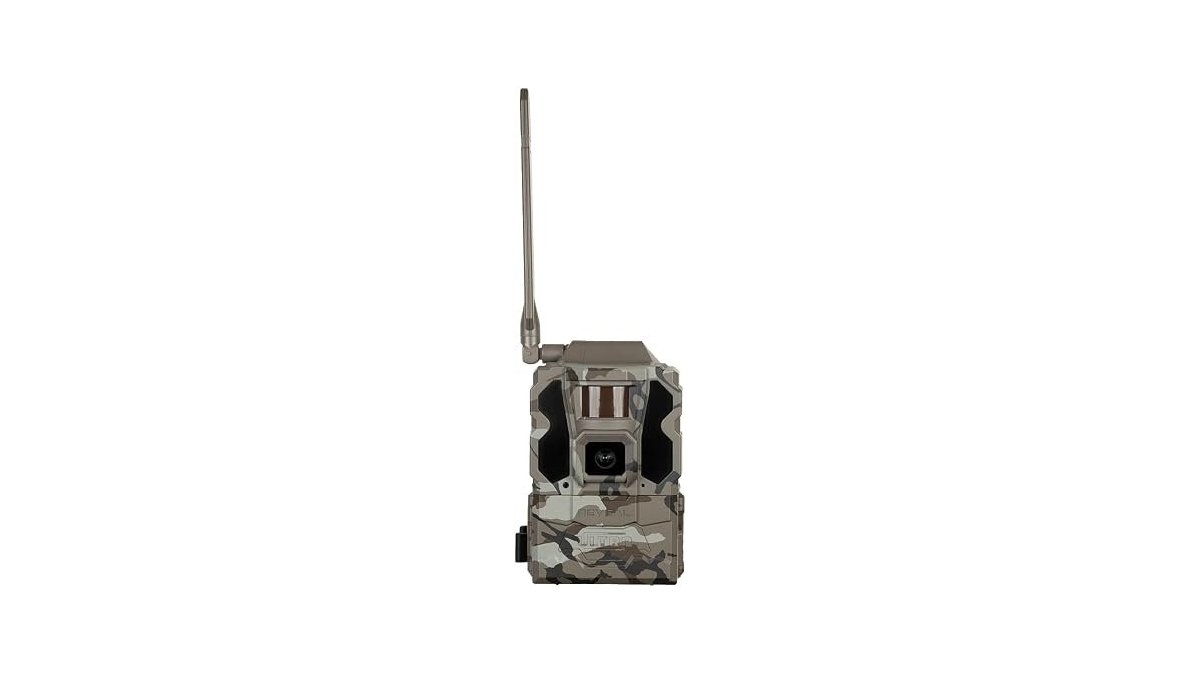
Finding the best trail camera for hunting depends on whether you need real-time updates or just want to gather photos without a subscription. Hunters often choose between cellular models for instant scouting and non-cellular options for total silence in the woods. Your decision usually hinges on your property’s signal strength, your budget for data plans, and how often you can visit the site. If you want to monitor game from your phone, the Tactacam Reveal Ultra and Spypoint Flex-M are top contenders, while the GardePro E5S serves those who prefer a simple SD card workflow.
1. TACTACAM Reveal Ultra Cellular Trail Camera

Best for: Hunters who want advanced cellular features and high-resolution, real-time field data.
This camera is built for those who demand constant updates without trekking to their stand. It features 4K photo and 2.5K video capabilities, giving you high detail when you request it through the app. The sub-0.5 second trigger speed ensures you capture fast movement, while the built-in GPS provides theft protection by sending alerts if the unit is moved.
The switchable flash allows you to pick between low-glow or no-glow, depending on how much stealth you need at night. If you have a property with spotty signal, the improved antenna helps maintain a more reliable connection than standard models.
Good if:
- You want live video and HD photo requests on demand.
- You need theft protection via active GPS tracking.
- You prefer the flexibility of switchable IR flash modes.
Skip it if:
- You have no interest in paying for a cellular data plan.
- You want a camera that works without any app setup.
2. TACTACAM Reveal Pro 4.0 Solar Cellular Trail Camera with GPS

Best for: Someone who wants a complete, solar-powered cellular system that runs autonomously.
This camera removes the need for frequent battery changes by including a solar panel and a rechargeable battery pack. It’s designed for remote locations where you can’t visit often to swap power sources. The dual sensors are optimized to provide clear images in both bright daylight and challenging night conditions.
Because this unit relies on cellular transmission, it isn’t suitable for areas with zero cellular service. The built-in 8GB storage means you don’t need to buy an SD card immediately, though one can be added for more space. It’s a powerful tool for those who want to “set it and forget it” for the entire season.
Good if:
- You want to avoid manual battery maintenance.
- You need a rugged, IP66-rated camera for harsh weather.
- You prefer a system that works out of the box with built-in storage.
Skip it if:
- You’re operating in an area without cellular network coverage.
- You prefer a simple, non-cellular camera for your setup.
3. SPYPOINT Flex-M Twin

Best for: Hunters who need reliable connectivity across multiple cellular networks.
The Spypoint Flex-M focuses on ease of use and broad signal coverage. Its dual-SIM technology automatically searches for available signals, which is a major advantage if you hunt in areas with weak or changing coverage. It delivers 32MP photos and 1080p video directly to your phone.
This camera is a great fit for those who want to manage their scouting remotely. It isn’t for someone who wants built-in solar power, as you would need to buy a separate battery pack for long-term, maintenance-free use. The app-based updates keep the camera current without requiring you to pull it from the tree.
Good if:
- You hunt in areas where signal strength varies between carriers.
- You want to manage settings entirely through a mobile app.
- You need high-resolution photo and video capabilities.
Skip it if:
- You prefer an integrated solar panel for power.
- You’re uncomfortable with app-based remote management.
4. Moultrie Edge 4 Solar Cellular Trail Camera

Best for: Hunters who want AI-assisted animal detection and solar efficiency.
This model stands out for its built-in AI, which identifies when a target is in the frame and switches to video mode automatically. The integrated solar panel and included rechargeable battery make it a reliable choice for long-term deployment. Its IP67 rating ensures it stays dry even during heavy rain or flooding.
The Live Aim feature is useful for getting the perfect angle before you finish your installation. It isn’t designed for users who want to use their own SD cards, as it relies on 8GB of internal memory. This is a solid pick if you want a smart camera that saves you from checking your site manually.
Good if:
- You need a camera that resists heavy water exposure.
- You want an integrated, high-capacity solar power system.
Skip it if:
- You require expandable storage via large, user-provided SD cards.
- You don’t want to use an app to manage your camera.
5. Stealth Cam Revolver Pro 2.0 360-Degree Cellular Camera with 40MP

Best for: Monitoring wide areas where a single-direction camera might miss game.
The 360-degree rotation is the main draw here, allowing you to cover more ground than a standard fixed-lens camera. It captures 40MP photos and 1440p video, providing high detail in all directions. The 0.35-second trigger speed is quick enough to catch moving animals as the camera pivots. You can adjust the photo resolution down to 4MP, 8MP, or 16MP if you need to save space, or use the 1-3 photo burst mode for better action shots.
This unit is better suited for open clearings or food plots where game could enter from any side. It isn’t for someone looking for a compact, low-profile camera, as the rotating mechanism adds size. If you have a specific narrow trail to watch, this feature might be more than you actually need. Stick to a fixed-lens model for trails to avoid wasting battery on unnecessary rotation.
If you’re monitoring a large field, utilize the 100-foot detection range and 4 power LEDs. These ensure you get clear images even in low-light conditions. Always use the 16-piece battery tray or the 12V DC auxiliary jack for long-term deployments.
Good if:
- You need to watch a wide, open area.
- You want high-resolution video and photo options.
- You prefer 32GB of built-in memory for your captures.
Skip it if:
- You only need to monitor a narrow, fixed trail.
- You want a small, discreet camera that’s easy to hide.
6. GardePro E5S Non-Cellular Trail Camera

Best for: Hunters who want the best image quality without cellular signal requirements.
The GardePro E5S is a non-cellular option that prioritizes pure image performance. By avoiding cellular transmission, you gain better battery life and complete privacy from signal-based issues. It captures 64MP photos and 1296p video, which are among the highest resolutions in this group.
This is the right choice for someone who visits their hunting grounds regularly and prefers to check their images by hand. Because it lacks cellular or Wi-Fi, you must retrieve the SD card to review your captures. If you have a secure spot where you can leave a camera for weeks, the lack of cellular power drain is a significant benefit.
Use the 1/4″-20 mounting thread to secure the unit to trees, posts, or fences. The E5S supports the GardePro SP350 Solar Panel (sold separately) for continuous outdoor use.
Watch your trigger placement carefully. With three PIR sensors, the camera achieves a 0.1s trigger speed. This is ideal for fast-moving wildlife, but it requires a clear path to avoid false triggers from swaying branches.
Good if:
- You want the highest resolution photos available.
- You don’t want to pay for a cellular data plan.
- You prefer a simple, reliable, non-cellular operation.
Skip it if:
- You need to know what is happening in the woods immediately.
- You’re unable to visit your camera site to check the SD card.
7. Browning Defender Pro Scout Max Extreme HD Cellular Trail Camera

Best for: Those who prioritize high-definition night imaging and fast performance.
Browning is well-known for its image processing, and this model delivers with 22MP photos and 1080p video. The RADIANT 6 night illumination reaches up to 120 feet, which is longer than many competitors. Its dual-carrier SIM cards make it versatile for different network environments.
Choose this model if you need to capture fast-moving subjects. The.25 second trigger speed ensures you catch game before it leaves the frame. If you’re scouting in areas with inconsistent service, rely on the pre-installed AT&T and Verizon SIM cards to switch carriers for better signal reliability.
This camera is designed for those who want a premium experience with fast trigger speeds. It isn’t for someone who wants a solar-integrated system, as you’ll need to manage batteries manually. If image clarity at night is your primary concern, this camera is built specifically for that purpose.
Good if:
- You need excellent night vision range.
- You want a fast trigger speed for moving game.
- You prefer a dual-carrier setup for better signal reliability.
Skip it if:
- You want a built-in solar charging system.
- You prefer a non-cellular, manual-check camera.
Where These Overlap
Most of these cameras offer similar core features like GPS tagging, high-definition video, and fast trigger speeds. The Tactacam Reveal Ultra, Reveal Pro 4.0, Spypoint Flex-M, and Browning Defender Pro all rely on cellular networks to send you data, making them functionally similar for a hunter who wants remote intelligence. The primary difference between them isn’t the quality of the image—which is consistently high across the board—but rather the specific app ecosystem and power management strategies each brand uses.
If you prioritize remote monitoring, choose a cellular model with auto-carrier switching, such as the Spypoint Flex-M or the Tactacam Reveal Pro 4.0, to ensure your camera connects to available signals. If your primary concern is avoiding return trips to the woods, favor models with integrated solar panels like the Moultrie Edge 4.
The non-cellular GardePro E5S serves as a reminder that connectivity isn’t always the goal. If you have a strict access schedule or hunt in areas with zero cellular reception, a non-cellular camera is the superior choice. You benefit from faster trigger speeds, such as the 0.1-second response found on the E5S.
Still Not Sure?
How often will I really visit my hunting spot?
If you can visit your stand once a week or more, a non-cellular camera like the GardePro E5S is excellent because it avoids data plans and signal issues. If you only visit during the season, a cellular camera like the Tactacam Reveal Pro 4.0 or Moultrie Edge 4 is essential. These allow you to see what is happening without leaving human scent in the area.
What do I already own that this must work with?
Think about your current phone and any other cameras you own. If you have a Moultrie feeder or other cameras from a specific brand, staying within that ecosystem makes management much easier. For example, if you already have a Moultrie account, the Moultrie Edge 4 will integrate perfectly. If you’re starting fresh, the Spypoint Flex-M offers great cross-carrier flexibility for new users.
What am I most likely to regret choosing?
Most users regret choosing a cellular camera when they have poor signal at their property. Before you commit to a subscription-based model, check the cellular coverage in your specific woods. If the signal is weak, you’ll be better off with a non-cellular model like the GardePro E5S, or a camera with dual-SIM technology like the Spypoint Flex-M to help bridge the gap.
Frequently Asked Questions
How do I ensure my trail camera stays powered through the winter?
Cold weather reduces battery performance, so choose a model with an integrated solar panel like the Moultrie Edge 4 or Tactacam Reveal Pro 4.0. For non-cellular models like the GardePro E5S, use high-quality lithium batteries, as they perform better in freezing temperatures than standard alkaline options.
Do I need a high-speed SD card for my trail camera?
A faster card ensures that high-resolution videos and burst-mode photos save quickly, preventing the camera from hanging between shots. Always check your specific model’s maximum capacity, as some cameras have limits on the size of the SD card they can read.
Why is my cellular trail camera not sending photos?
The most common cause is a weak signal in the area where the camera is placed. Cameras like the Spypoint Flex-M and Tactacam Reveal Ultra use automatic signal detection, but even these cannot overcome a complete dead zone. Ensure your camera is mounted in an area with clear cellular reception.
Can I use a trail camera for home security as well as hunting?
Yes, many hunters use their cameras for property security during the off-season. Models with 360-degree coverage like the Stealth Cam Revolver Pro are useful for monitoring driveways or equipment sheds. Since most feature no-glow infrared flash, they remain discreet at night, which is ideal for security.


